
Article contents
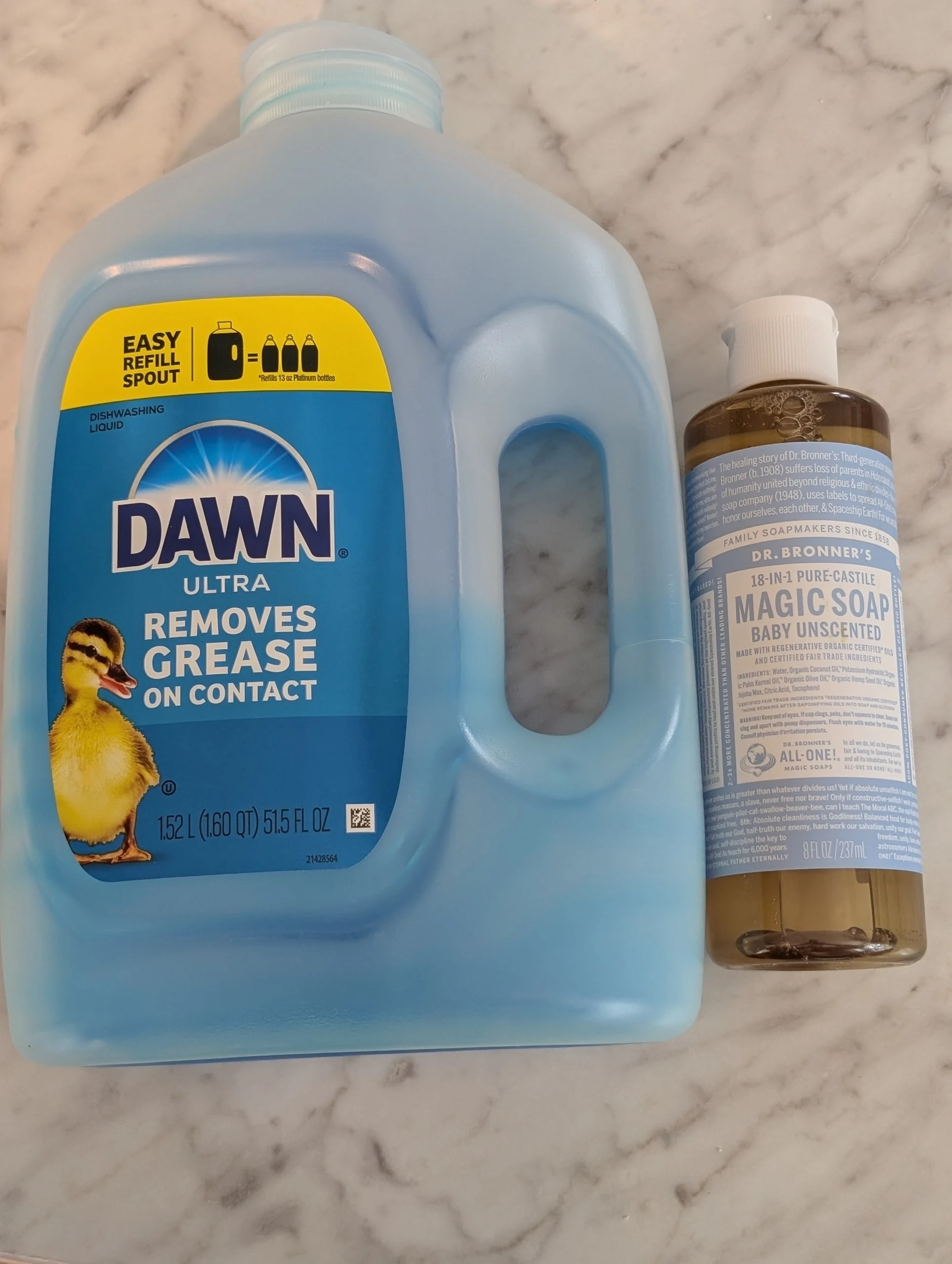
If you've spent any time in the crunchy world, you've probably heard people rave about Castile soap.
According to the internet, it can wash your dishes, clean your counters, mop your floors, wash your dog, clean your produce bins, and possibly solve world peace. I think it's even safe for the turtles.
Naturally, the question becomes:
Can Castile soap replace dish soap?
The more I learn about traditional soaps, the more I think the answer might be yes—for most dishes.
Not every dish. Not every kitchen. But for the majority of what passes through my sink each day, I'm beginning to wonder if Castile soap could handle the job just fine.
Why I'm Looking at Dish Soap Differently
The longer I live a more natural lifestyle, the less interested I become in finding the perfect product and the more interested I become in asking a simple question:
What's the least complicated thing that will get the job done well?
Traditional soap has been around for thousands of years. It's made from oils and lye. I understand what it is, how it's made, and why it works.
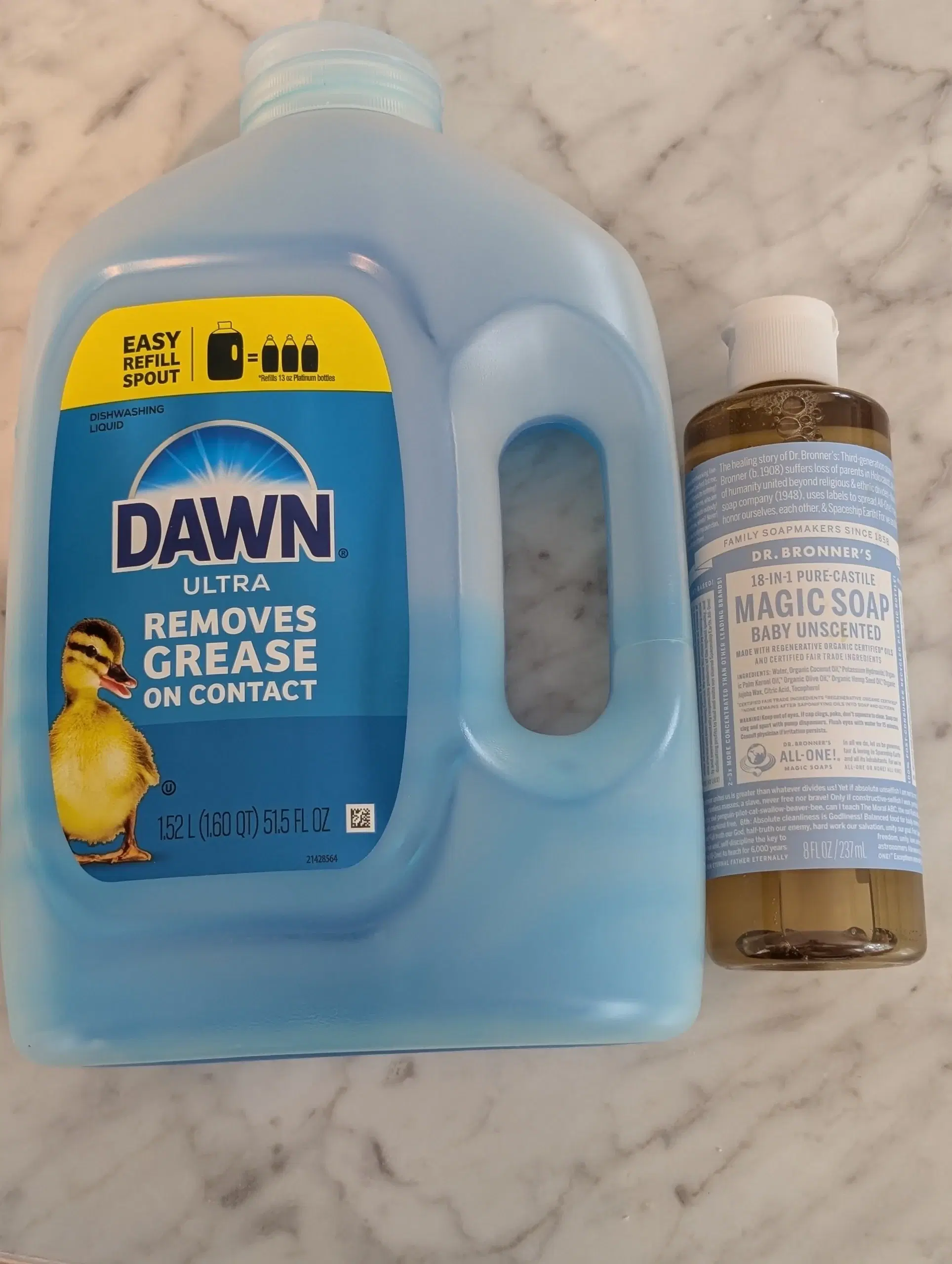
Modern dish soaps are different. Most are detergents made with ingredients called surfactants. Their job is to help water and grease mix together so oily messes can be washed away more easily.
Many surfactants are derived from petroleum, plant oils such as coconut or palm, or a combination of both. They were developed because traditional soap struggles with two things:
- Heavy grease
- Hard water
In fact, detergents became especially popular during and after World War II because they worked better in hard water and didn't rely on the same fats and oils needed for other wartime uses.
So dish soap wasn't invented because soap stopped working. It was invented because people wanted something that worked better under certain conditions.
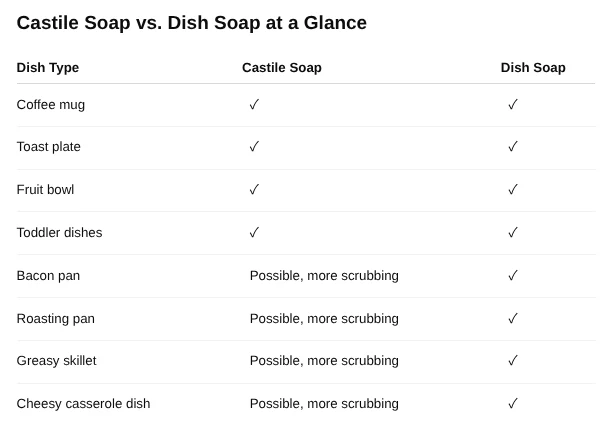
The Toast Plate Test
Imagine you're standing at your sink.
You have:
- A coffee mug
- A plate that held toast
- A bowl that held strawberries
- A toddler cup
Do you need a specialized grease-cutting detergent engineered to dissolve heavy oils? Personally, I don't think so. This is where Castile soap seems to shine. For everyday dishes that aren't particularly greasy, Castile soap appears to do exactly what most of us need it to do: clean the dish and remove food residue.
Why People Love Castile Soap
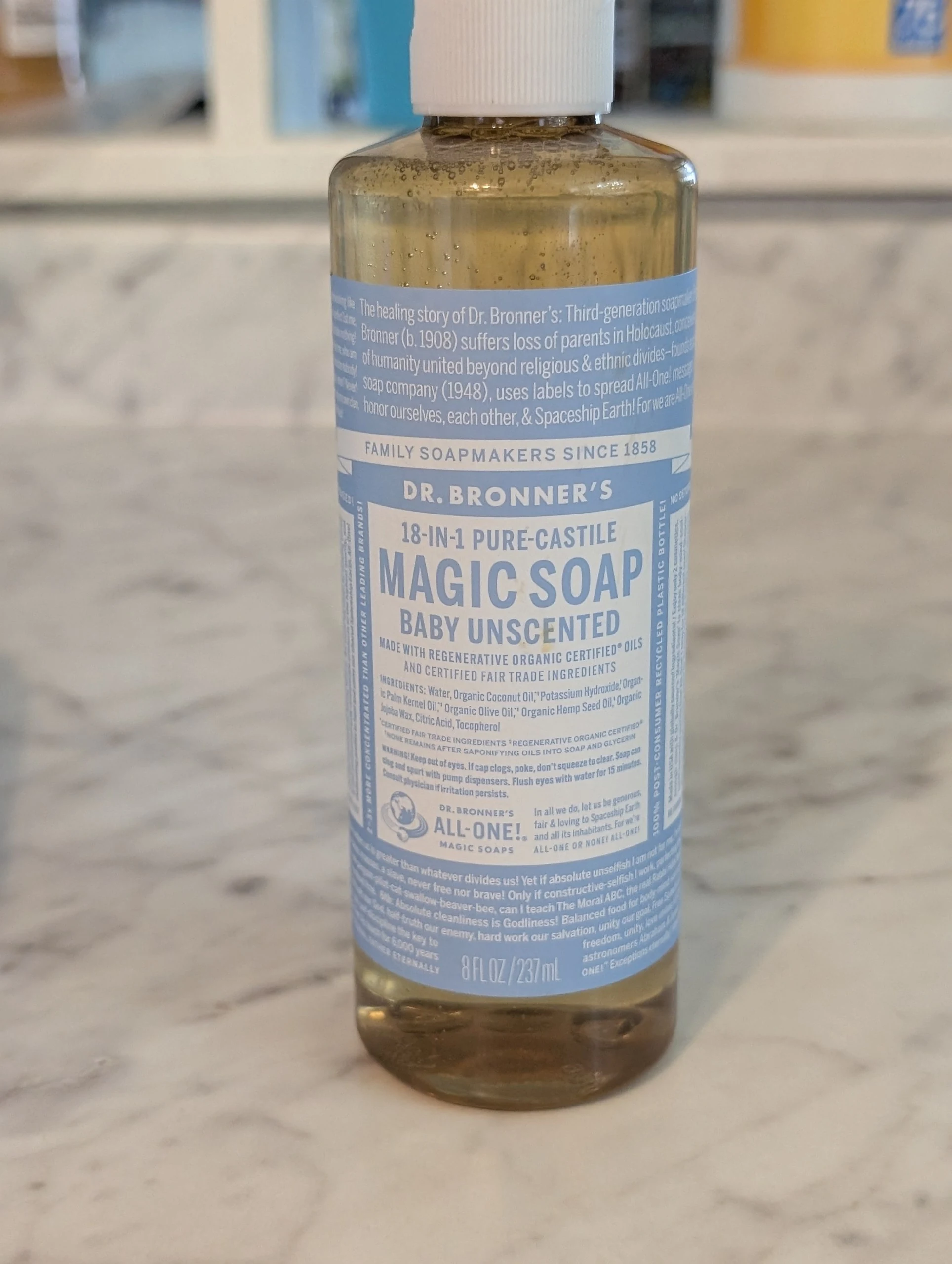
Part of the appeal is ingredient simplicity. Rather than relying on multiple surfactants, fragrances, dyes, preservatives, and stabilizers, Castile soap is a true soap made from oils, commonly olive oil but other plant-based oils as well.
I also appreciate the versatility. There's something satisfying about one simple product doing so many jobs, and I love the idea of a cleaning closet that isn't filled with multiple half-used bottles.
The same bottle can be used for:
- Handwashing
- Cleaning counters
- Mopping floors
- Washing garden tools
- Cleaning produce bins
- Washing dishes
Where Castile Soap Struggles
Now let's change the picture.
Instead of a toast plate, imagine you're cleaning:
- A bacon pan
- A greasy skillet
- A roasting dish
- A cheesy casserole pan
This is where Castile soap starts to show its limitations.
Can it clean these dishes? Usually, yes.
Will it take more scrubbing? Usually, yes.
Dish detergents were specifically engineered to break apart grease, and they do that job very well. Sometimes modern products genuinely solve a problem.
The Well Water Challenge
If you've tried Castile soap and thought:
"Why does everyone love this stuff?. It doesnt work at my house. It doesn’t even suds up!"
Your water may be the reason.
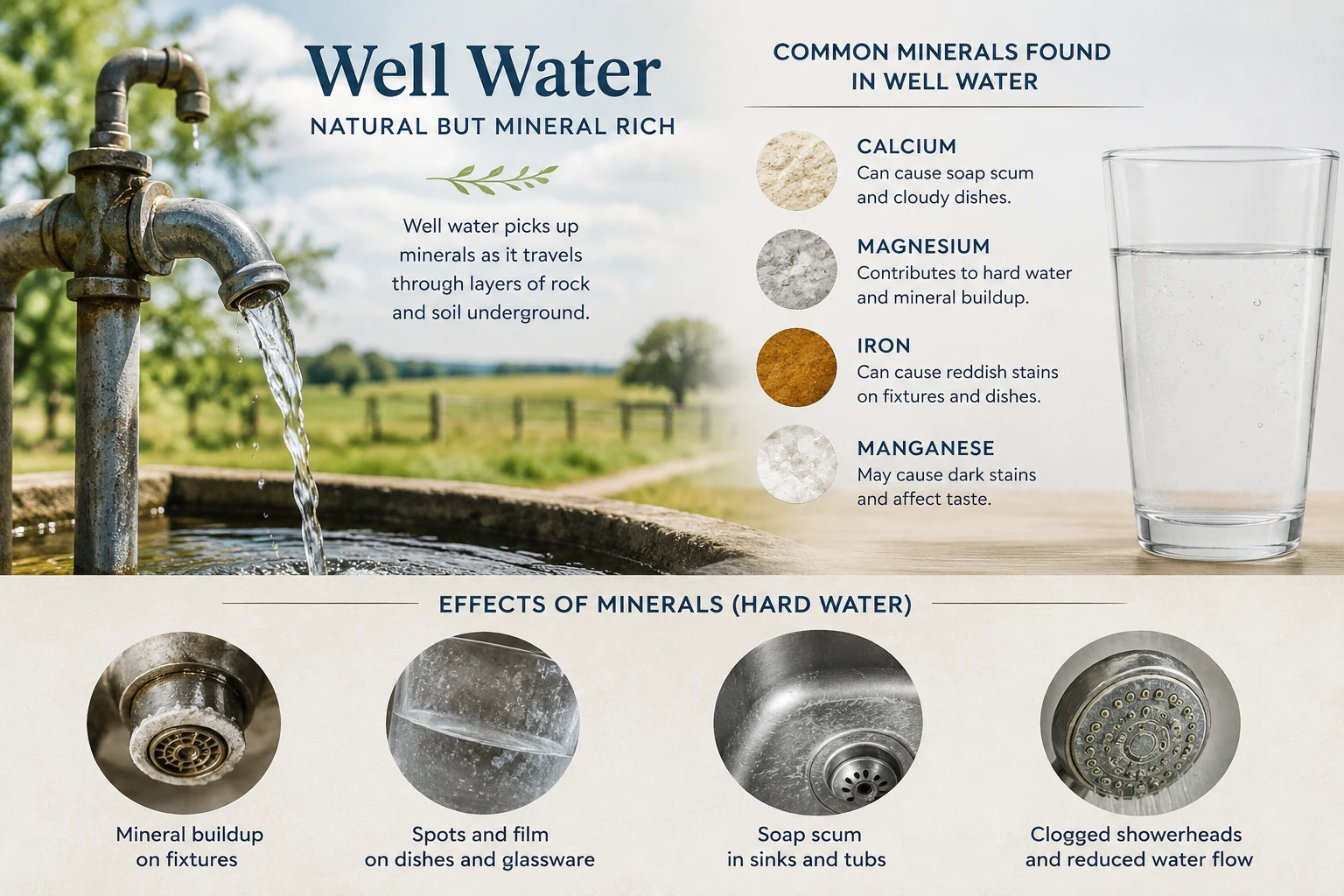
True soap reacts with minerals like calcium and magnesium. If you have hard water—or well water with a high mineral content—you may notice:
- Soap scum
- Cloudy dishes
- A film on sinks and faucets
The soap is still cleaning, but it may not leave behind the sparkling finish you're used to seeing from detergent-based dish soaps.
What If You Have Well Water?
If you're on well water like we are, don't assume Castile soap won't work for you.
A lot depends on the mineral content of your water.
Fortunately, there are a few ways people work around this:
- Use less soap than you think you need.
- Rinse with hot water.
- Occasionally use a vinegar rinse to help dissolve mineral buildup.
- Consider a water softener if your water is extremely hard.
Many families with well water find that Castile soap works well for everyday dishes like coffee mugs, fruit bowls, and lunch plates, while keeping a detergent on hand for particularly greasy cookware.
If you're curious about Castile soap, I'd encourage you to experiment rather than assume it won't work. Your water chemistry may have a bigger impact on your results than the soap itself.
My Farmette Perspective
Part of my interest in Castile soap comes from where I live.
We live on a small farmette with a well and a septic system. Unlike a city, I don't have a large water treatment facility between my sink and the environment around my home. What goes down my drain eventually ends up in my septic system and then back into the soil on our property.
Because of that, I've become more aware of what I'm bringing into my home and what I'm sending back out of it. That doesn't mean I expect everything to be perfectly natural or that every modern product is harmful. Modern detergents were created to solve real cleaning problems. At the same time, I find myself drawn to products that are simple, biodegradable, and have a long history of use.
As I've been learning more about Castile soap, I've started asking myself a simple question:
Do I really need a specialized detergent for every dish in my sink?
For a greasy bacon pan, it would be helpful. But for a toast plate, a coffee mug, or a bowl that held strawberries? Maybe not.
I usually have a bottle of Dawn Powerwash (the Free & Clear version) somewhere in the house, and I don't plan on throwing it away anytime soon. But the more I learn about traditional soaps, the more curious I become about using them for the everyday dishes that make up most of my sink.
Maybe that's the country kid in me, but I like knowing that the products I use every day are as close to the source as possible.
My Final Take
I don't think dish soap is evil. I also don't think every dish in my kitchen requires a specialized grease-cutting detergent. The more I learn about Castile soap, the more I appreciate the idea of using a traditional soap for everyday cleaning and saving detergents for the jobs they were designed to handle.
At this point, I'm less interested in finding the "perfect" cleaner and more interested in using the simplest thing that works. That philosophy extends far beyond the kitchen sink and helps bring a balance to this crunchy minded mama!