Article contents
Contains Affiliate Links
Fire cider is one of those traditional remedies people reach for when the sniffles start, when they’re feeling under the weather, or when they simply want something warm, spicy, and very sinus-opening. While fire cider hasn’t been proven to prevent colds or the flu (but remember, a lack of scientific evidence is not the same thing as evidence of a lack of benefit), there are some really interesting ingredients AND food science packed into one little jar.
I just made my batch of fire cider and thought I’d walk through what I put in it, why I put it in, and introduce you to some of the molecules doing the hard work inside that jar.
What's in My Fire Cider?
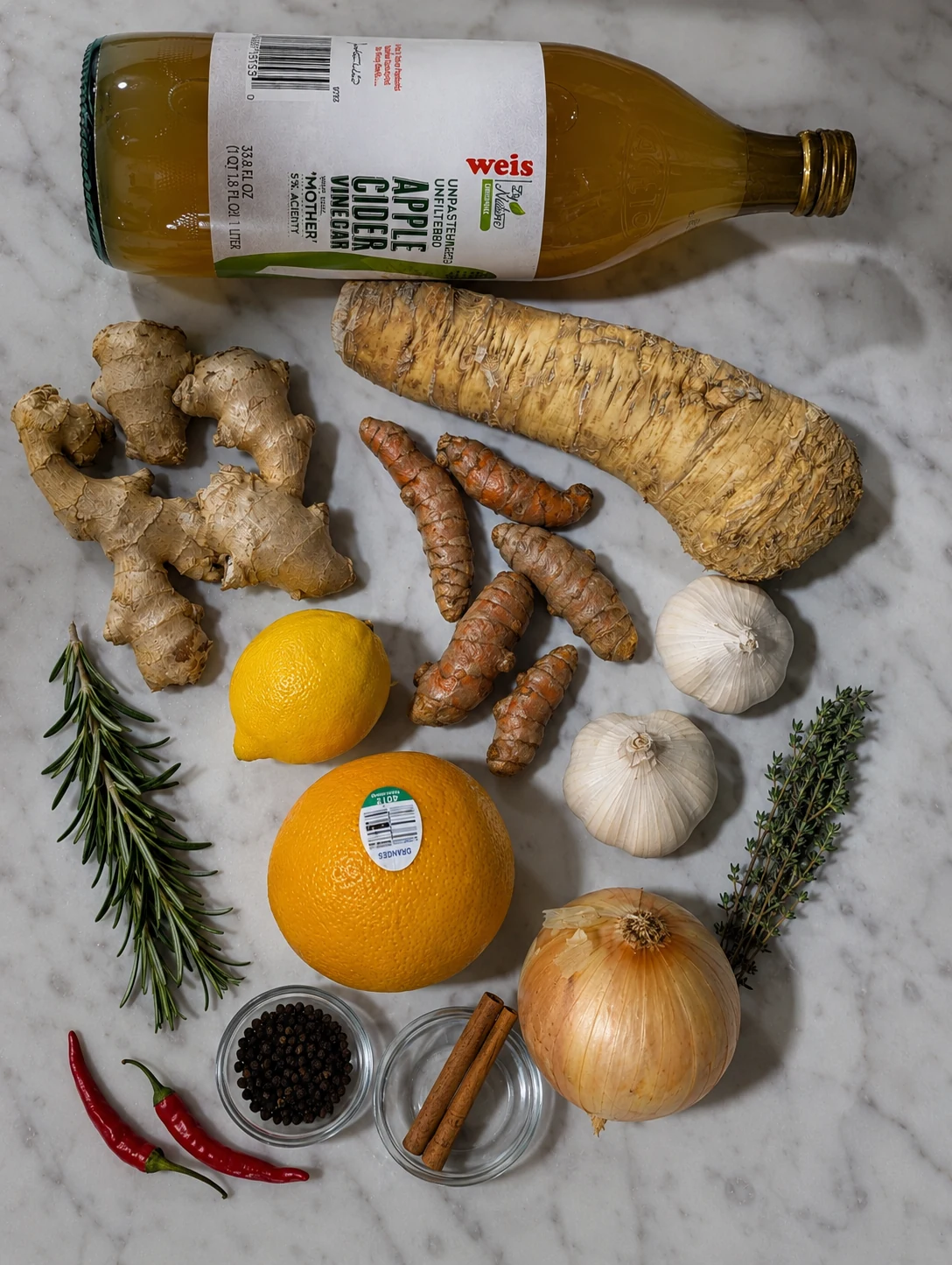
I made a fairly traditional fire cider using ingredients I either already had or could easily buy at my local supermarket.
Apple cider vinegar: This is our extraction liquid. Vinegar is mostly water with acetic acid, giving it a low pH. That acidic environment is unfavorable to the growth of many spoilage and pathogenic bacteria. It also gives us a liquid medium for extracting some of the compounds and, of course, lots of flavor from everything we're putting into our jar.
Horseradish: Horseradish is pretty pungent. It adds that characteristic bite and gives you that sinus-opening sensation when you eat it. There's some cool science happening when you cut it but we'll get to that in a minute.
Ginger: Ginger is warm with a spicy bite, but it's a different kind of heat than what you get from a hot pepper.
Garlic: Garlic brings another kind of pungency. It's savory, strong, and one of the classic fire cider ingredients. Because there is so much garlic I highly recommend a silicone garlic Peeler. It gets off all the pappery garlic skin a little bit faster than peeling by hand. My sister cooks a like of Asian food, which has a lot of garlic in it and let me borrow hers. I loved it!
Onion: Onion rounds out the garlic and horseradish a little and adds some sweetness, especially if you use something like a Vidalia or another sweet onion.
Turmeric: Turmeric adds that beautiful golden color along with an earthy flavor.
Thai chile: Usually you'll see jalapeños or cayenne peppers in fire cider recipes. But I didn't grow jalapeños this year. I did grow Thai chile peppers, so that's what we went with!
Regardless of the pepper, if you use a hot pepper, you will feel the heat! This is where some of the fire in our fire cider comes from.
If you want a milder version for someone who's a little natural-remedy-cautious—or simply doesn't enjoy really spicy things—you can decrease the amount of hot pepper or leave it out altogether. You'll still have plenty of pungency from the ginger, horseradish and garlic.
Orange: Orange adds some sweetness and citrus flavor that helps balance all that vinegar and pungency.
Lemon: I LOVE lemon. I love adding it to things. It brightens the whole flavor and helps cut through that heavy garlic and onion.
Thyme and rosemary: These give the finished cider a little more herbal depth and complexity.
And after everything has been extracting for about three to four weeks, you can strain it and mix in some honey to make the finished fire cider a little more tolerable because this is not the tastiest home remedy like elderberry syrup.
Just remember, you can’t go too wrong. If you have ½ cups of horseradish instead of ¾ cup, that’s fine.
My Traditional Fire Cider Recipe
Ingredients
- ¾ cup fresh horseradish, peeled and chopped
- ½ cup fresh ginger, sliced
- ¼ cup fresh turmeric, sliced
- 10 garlic cloves, peeled and crushed
- 1 medium onion, roughly chopped
- 2 Thai chile peppers, sliced or split lengthwise
- 1 orange, sliced
- 1 lemon, sliced
- 4–5 sprigs fresh thyme
- 2–3 sprigs fresh rosemary
- 1 teaspoon whole black peppercorns
- 5% acidity apple cider vinegar, enough to completely cover the ingredients
- ¼–½ cup honey, or to taste, added after straining
Instructions
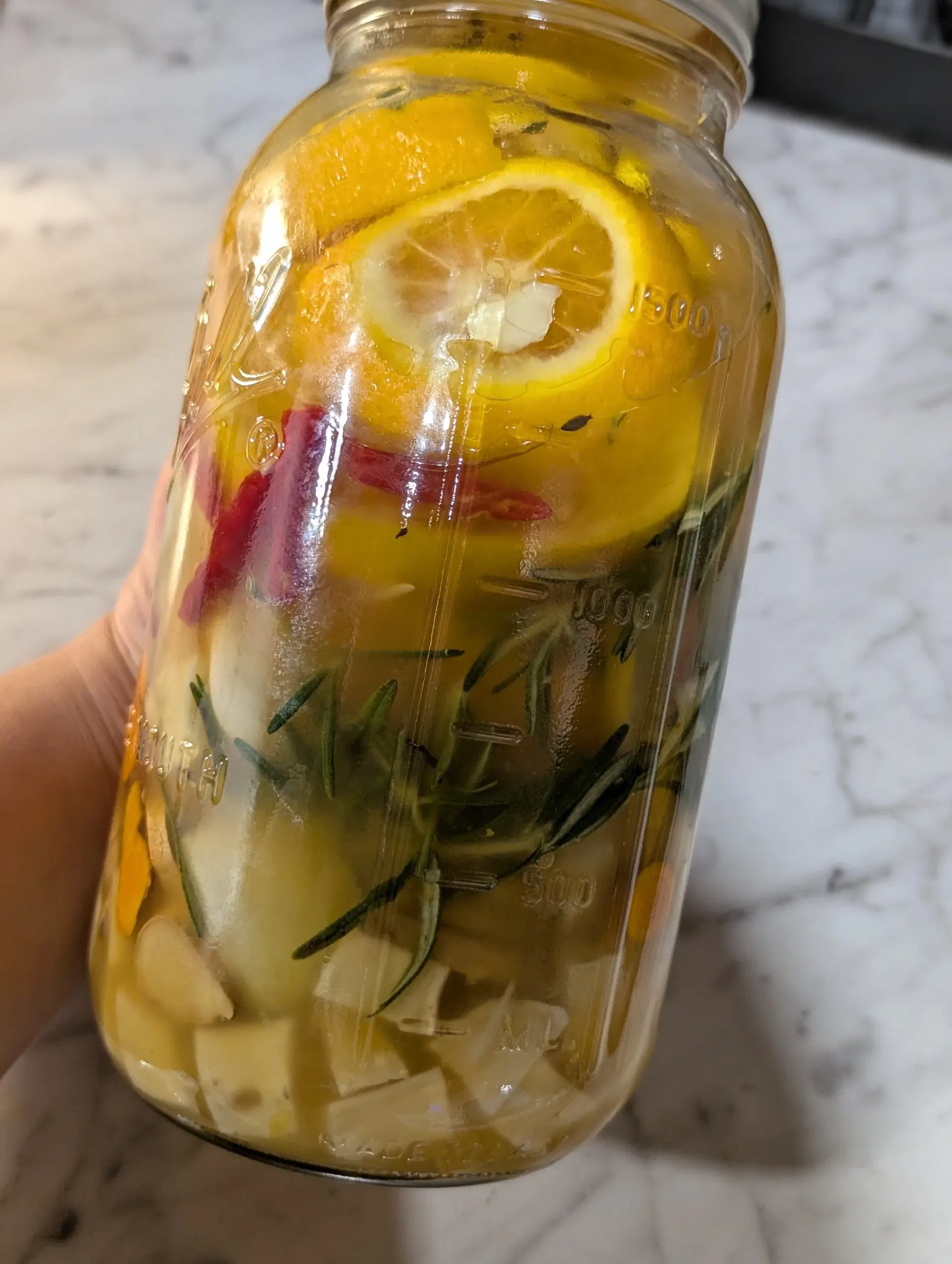
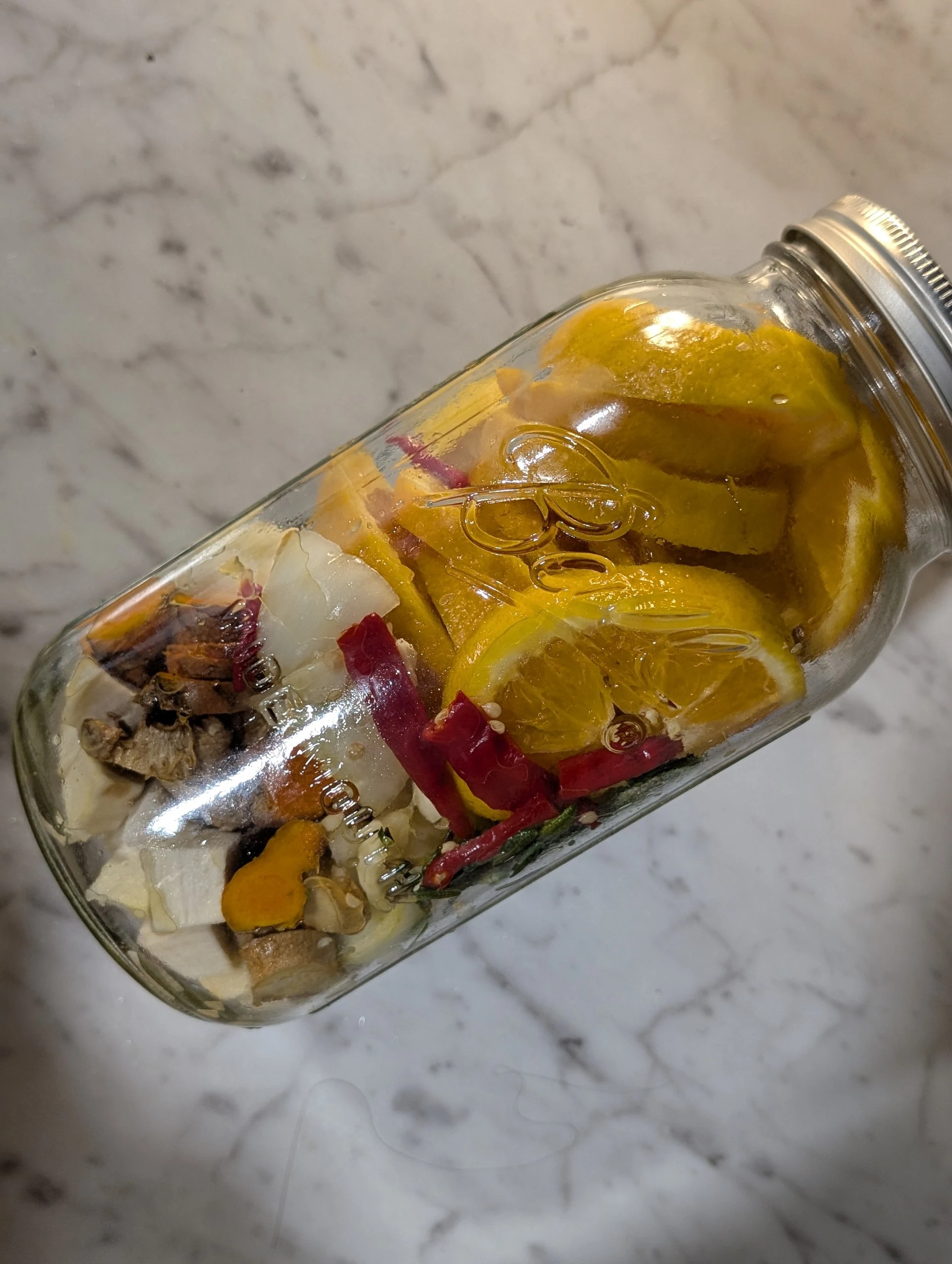
Add the horseradish, ginger, turmeric, garlic, onion, Thai chiles, orange, lemon, thyme, rosemary, and peppercorns to a clean half-gallon jar.
Pour the apple cider vinegar over everything until the ingredients are completely submerged. Leave a little room at the top so you can shake the jar without spilling it everywhere.
Cover with a nonreactive lid and keep the plant material submerged in the vinegar.
Let it extract for approximately 3–4 weeks, shaking the jar periodically.
Strain out the solids and add honey to taste. I recommend starting with less—you can always add more!
Meet the Molecules!
Now for my favorite part.
There is some really fascinating food chemistry hiding inside this jar.
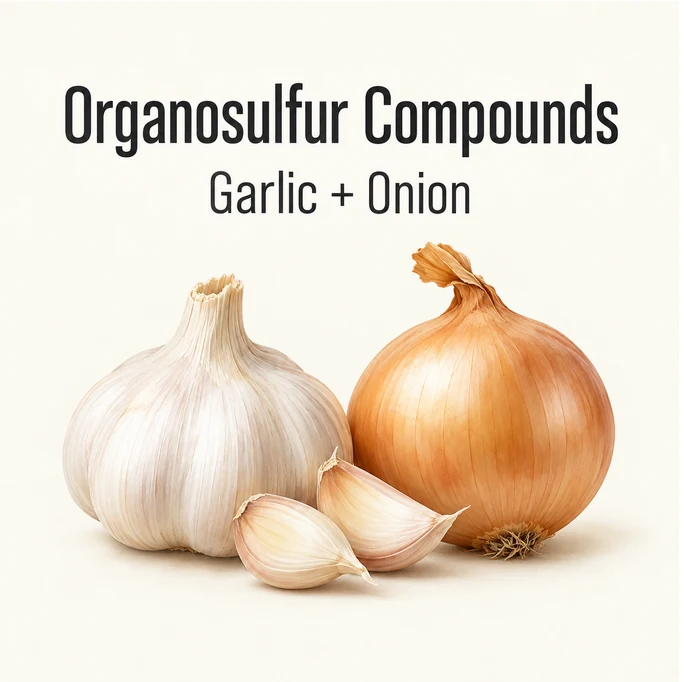
Organosulfur compounds → Garlic + Onion
Garlic and onion are members of the Allium family and contain sulfur-containing compounds. Garlic is particularly interesting because damaging the garlic tissue allows an enzyme called alliinase to act on alliin, ultimately producing allicin and other sulfur compounds. These compounds are responsible for much of garlic's characteristic aroma and have been widely studied for their biological activity.
Glucosinolates + Isothiocyanates → Horseradish
Horseradish contains compounds called glucosinolates. When you cut or crush horseradish, you damage its cells, allowing an enzyme called myrosinase to interact with those glucosinolates. This produces compounds called isothiocyanates.
And that's part of the reason freshly cut horseradish suddenly becomes so pungent.
Gingerols + Shogaols → Ginger
Fresh ginger contains compounds called gingerols, which contribute to its characteristic pungency and have been studied for anti-inflammatory and antioxidant activity. Processing and heat can change ginger's chemistry, including conversion toward compounds called shogaols. That's one reason raw ginger extracted in vinegar isn't chemically identical to dried ginger or ginger tea.
Curcuminoids → Turmeric
Turmeric contains a family of compounds called curcuminoids, the most famous being curcumin. Curcumin is responsible for much of turmeric's gorgeous yellow-orange color and has been extensively studied for its antioxidant and anti-inflammatory activity.
One important food-science caveat: curcumin isn't particularly water-soluble. Just because a compound exists in our starting ingredient doesn't mean all of it ends up in our finished vinegar extract.
Capsaicinoids → Thai Chile
Thai chiles contain capsaicinoids, particularly capsaicin.
Capsaicin interacts with receptors involved in our perception of heat and pain. Interestingly, the chile isn't actually "burning" your mouth—the capsaicin is triggering receptors that normally respond to heat.
That's some pretty cool chemistry happening at the dinner table.
Polyphenols + Flavonoids → Citrus + Herbs
Our orange, lemon, thyme and rosemary contain a wide variety of plant compounds, including polyphenols and flavonoids. Many of these compounds have antioxidant activity, although exactly how much of each compound makes it into our finished vinegar depends on factors like solubility, particle size, time and temperature.
Acetic Acid → Apple Cider Vinegar
Finally, there's acetic acid, the acid largely responsible for vinegar's characteristic sour flavor and low pH.
The vinegar isn't just there because it's traditional. It's the liquid environment in which our extraction is taking place.
Why Surface Area Matters
Now let's talk about surface area and why it's important.
The more surface area we expose on the foods we're using in this extraction, the more opportunity there is for the vinegar to come into contact with the plant material and for soluble components to move into our liquid.
So while it may be tempting to throw everything into the jar whole—or skip the crushing and cutting step—I wouldn't.
More exposed surface area = more contact with our extraction liquid.
But there's another reason we cut and crush our ingredients.
Sometimes we're actually starting chemical reactions.
Take garlic.
You can peel a garlic clove, but when you crush or chop it, you rupture its cells. That brings previously separated components together and allows the enzyme alliinase to begin reactions that lead to the formation of allicin.
Horseradish has a similar story.
When we cut or grate it, we're damaging its plant cells and allowing myrosinase to interact with glucosinolates, producing those wonderfully pungent isothiocyanates.
And our Thai chile?
Cutting it exposes more of the chile—including the internal tissues where capsaicinoids are concentrated—to our extraction liquid.
So chopping isn't just about making everything fit inside your Mason jar.
You're increasing surface area, releasing flavor, exposing compounds to your vinegar, and—in ingredients like garlic and horseradish—triggering some pretty fascinating food chemistry before the extraction even really gets started.
And that is why I don't just toss everything into my fire cider whole.
There's a whole lot of science happening inside that little jar.
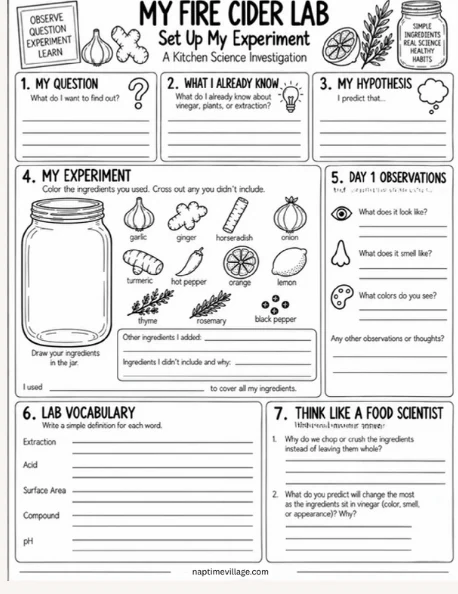
Download a free Fire Cider Printable