
From Garden Soil to Crispy Roasted Potatoes: The Sink That Made Harvest Prep So Much Easier
There is something especially satisfying about walking outside, digging potatoes from the soil, and knowing that a few hours later those same potatoes will be sitting on the dinner table.
- Article details
- By Austin Nissley5 min readUpdated
There is something especially satisfying about walking outside, digging potatoes from the soil, and knowing that a few hours later those same potatoes will be sitting on the dinner table—golden, crispy, and still soft and fluffy in the middle.
But there is one part of growing your own potatoes that doesn't always make it into the pretty garden photos, they are really dirty.
Freshly dug potatoes can come into the house covered in clumps of soil, fine grit, and bits of the garden. And when you're bringing in a decent-sized harvest, washing them in a small kitchen sink can quickly turn into a mess.
That is one of the reasons our new workstation sink has turned out to be such a useful part of our garden-to-kitchen routine.
Growing food at home has a funny way of changing how you look at a kitchen.
A sink isn't just somewhere to wash dishes anymore.It becomes the first processing station for food coming in from the garden.
Potatoes get washed there.
Tomatoes and Peppers get cleaned there. Leafy greens get soaked there. And during harvest season, there can be a surprising amount of dirt involved.
Our large stainless steel workstation sink gives us plenty of room to deal with all of that without feeling like we're trying to wash a garden harvest inside a tiny bowl.
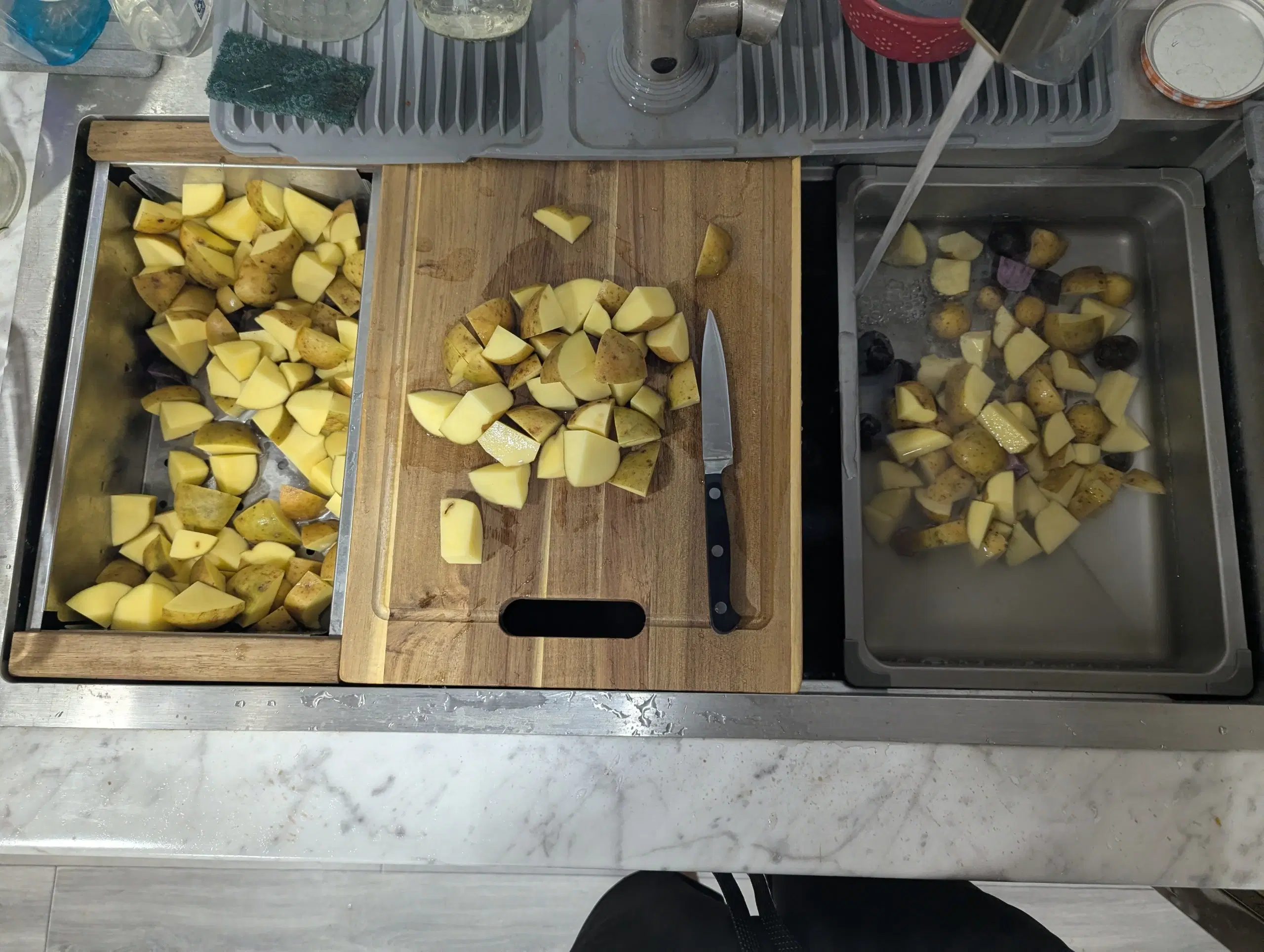
The large single basin is particularly helpful with potatoes because I can bring in a batch, rinse off the loose soil, scrub them, and then move directly into the next step of preparing them for roasting.
The Workstation Design Makes More Sense When You Grow Food. One feature I've come to appreciate is the workstation-style ledge.
Instead of the sink simply being an empty basin, accessories can sit across the top of it. The setup we chose includes things like a colander, cutting board, and roll-up drying rack.
That means a lot of the messy prep work can happen right over the sink.
For potatoes, I can rinse them, let them drain in the colander, cut them nearby, and keep most of the water, peelings, and dirt contained in one area.
It sounds like a small thing, but when you regularly bring food in from outside, having a dedicated place where dirty garden produce becomes clean kitchen produce makes a big difference. Washing Homegrown Potatoes or sweet corn makes processing a breeze.
When potatoes first come out of the garden, I don't worry about making them perfectly clean immediately if they're going into storage.
Potatoes intended for storage are generally better left unwashed and allowed to cure first.
But when I know we're eating some of the harvest right away, they can go straight to the sink.
I rinse away the loose soil first and then gently scrub the skins until they're clean. One of my favorite things about homegrown potatoes is leaving those skins on.
Once they're cleaned up, the potatoes hardly resemble the dirt-covered little rocks that came out of the ground a few minutes earlier.
And from there, they're ready for my favorite part.
My Go-To Homemade Crispy Roasted Potatoes
There is something so satisfying about roasted potatoes that crackle on the outside yet stay soft and fluffy inside.
After a lot of trial and error, I've landed on a simple method that works consistently using the air-fry setting on our Breville.
First, I cut the potatoes into roughly even pieces.
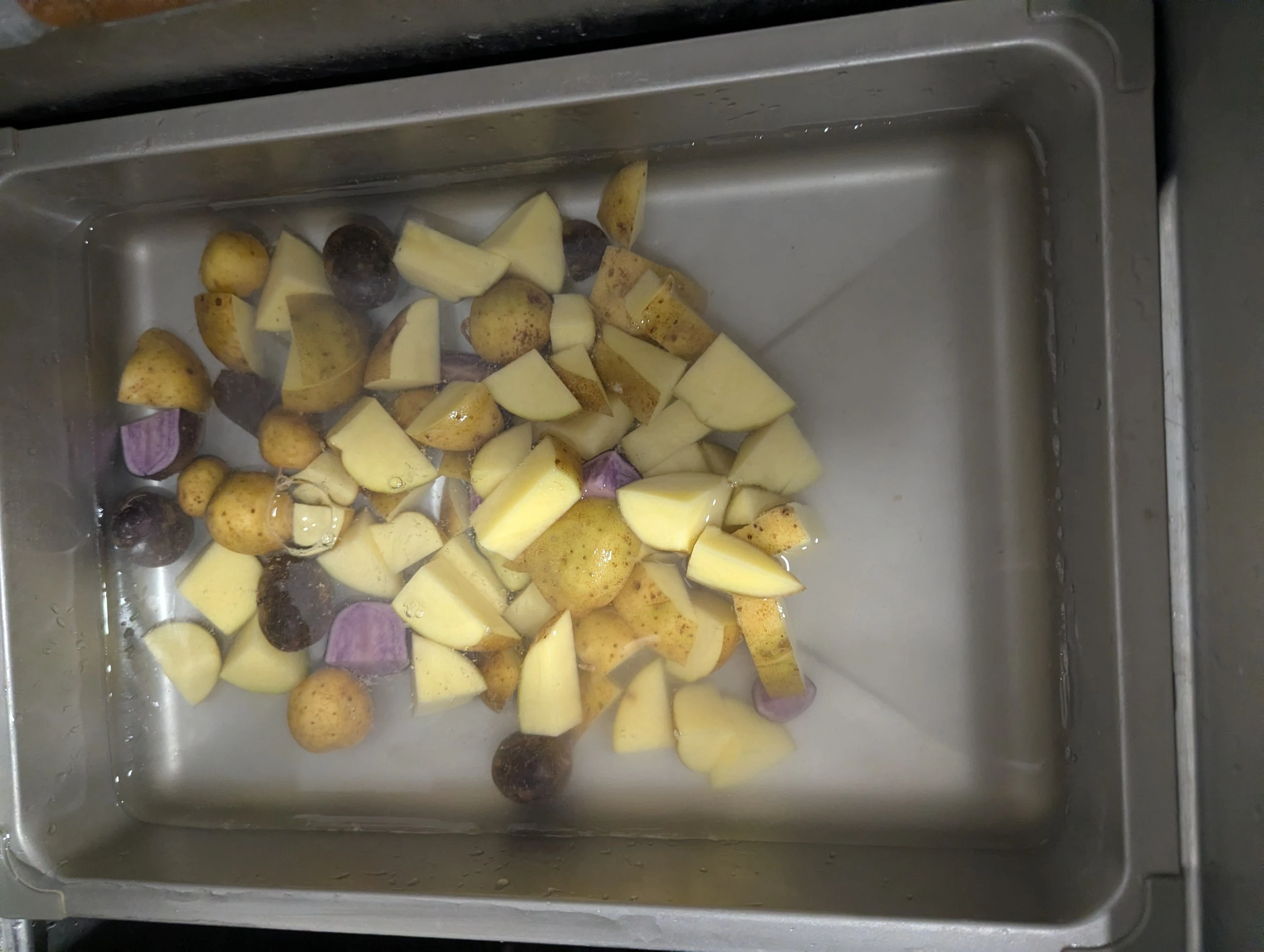
Then I soak them in cold water for about 20 to 30 minutes.
This is another place where the sink setup comes in handy. After washing the potatoes, I can move directly into soaking and draining without creating another pile of dishes or carrying wet potatoes around the kitchen.
After soaking, I drain them and dry them really thoroughly.
That part matters.
Any water left on the surface has to evaporate before the potatoes can really begin browning.
Once they're dry, I toss them with:
- A little oil
- Salt
- Freshly ground pepper
Then they go into the Breville on the air-fry setting at 425°F, spread out so there is plenty of room for hot air to circulate around each piece.
After about 15 minutes, I flip or shake them.
Then they cook for another 8 to 12 minutes, depending on the size of the pieces, until the edges are deeply golden and crisp.
I usually finish them with a little flaky salt or some chopped parsley.
Nothing complicated.
Just potatoes we pulled out of the ground, cleaned in the sink, and roasted until crisp.
Why Soaking Helps
The cold-water soak isn't just an extra step.
Cutting a potato exposes starch at the surface. Some of that loose surface starch can contribute to a gummy exterior instead of the crisp crust we're looking for.
Soaking helps wash some of that starch away.
But there's an important second half to the process:
Dry the potatoes extremely well afterward.
If the potatoes are still wet when they go into the oven or air fryer, that moisture produces steam.
And steaming is basically the opposite of what we're trying to accomplish.
Removing some surface starch + thoroughly drying the potatoes + hot circulating air = a much better chance of getting that crispy outside and creamy center.
A Sink Probably Won't Make You a Better Gardener…
…but it can make dealing with everything you grow a lot easier.
That's what I've liked most about adding a large workstation sink to our kitchen.
It isn't really about having a fancy sink.
It's about having a workspace that fits the way we actually use our kitchen.
When you're growing some of your own food, the kitchen and garden start becoming extensions of one another.
The garden produces the ingredients.
The sink becomes the cleanup and prep station.
The cutting board turns those ingredients into dinner.
And eventually a tray of crispy potatoes comes out of the oven.
The Sink We're Using
We chose the Fulorni 33-inch undermount stainless steel workstation sink.
It has a deep single-bowl design with an integrated workstation ledge and accessories that can sit across the sink, including a colander, cutting board, and drying rack.
For a household that regularly brings vegetables in from the garden, that large open workspace has been especially useful.
"View the sink we used on Amazon" (https://a.co/d/07k7szBe)
If you're purchasing through an affiliate link, add your normal Naptime Village Amazon Associates disclosure here.
From Soil to Supper
Growing potatoes isn't necessarily the most glamorous gardening project.
You're digging around in the dirt for something you can't even see until harvest day.
But that's also what makes it fun.
You plant a small seed potato, let the plant grow all summer, dig into the soil months later, and suddenly dinner starts appearing.
Then those dirty potatoes make their way through the sink, into a cold-water soak, onto a roasting tray, and finally onto the table.
There aren't many meals simpler than roasted potatoes.
But when you grew the potatoes yourself, even something that simple feels pretty special.
And for us, this sink has become one small but surprisingly useful part of getting food from the garden to the table.