
Fermented Garlic Honey (Easy Cough & Sore Throat Soother)
Make a simple jar of fermented garlic honey to soothe coughs and scratchy throats with two ingredients, busy-parent tips, and make-ahead storage you can prep before cold season...
- Article details
- By Sharon Nissley13 min readUpdated
Article contents
Fermented Garlic Honey: An Easy Homemade Cough & Sore Throat Remedy
This post contains Amazon affiliate links. If you purchase through one of my links, I may earn a small commission at no additional cost to you.
Important: Honey should never be given to a child under 12 months old because of the risk of infant botulism. This recipe is a food-based home remedy we use in our family, not a substitute for medical care. If you or your child is very sick, having trouble breathing, becoming dehydrated, experiencing persistent or worsening symptoms, or you're simply concerned—call your doctor.
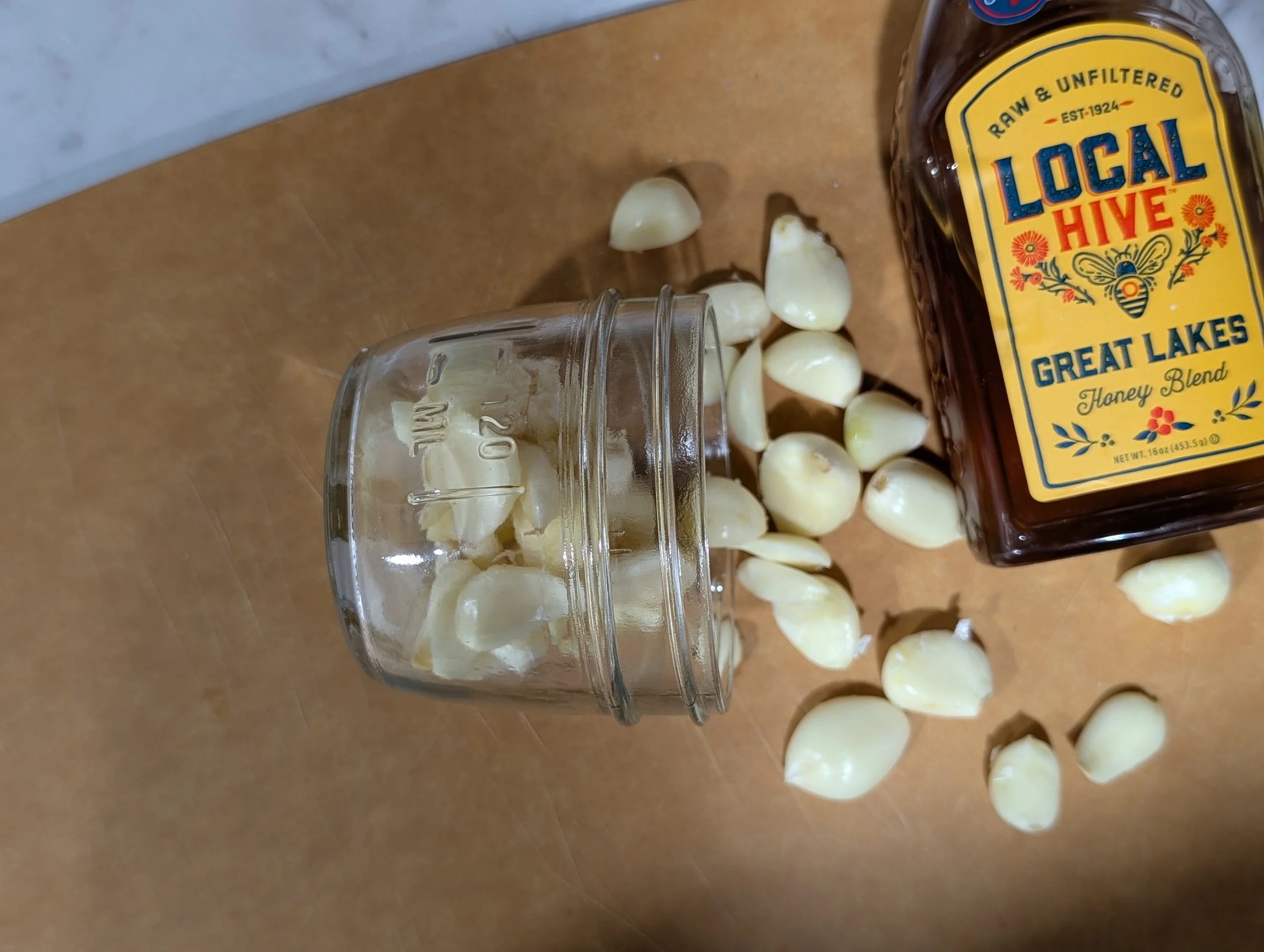
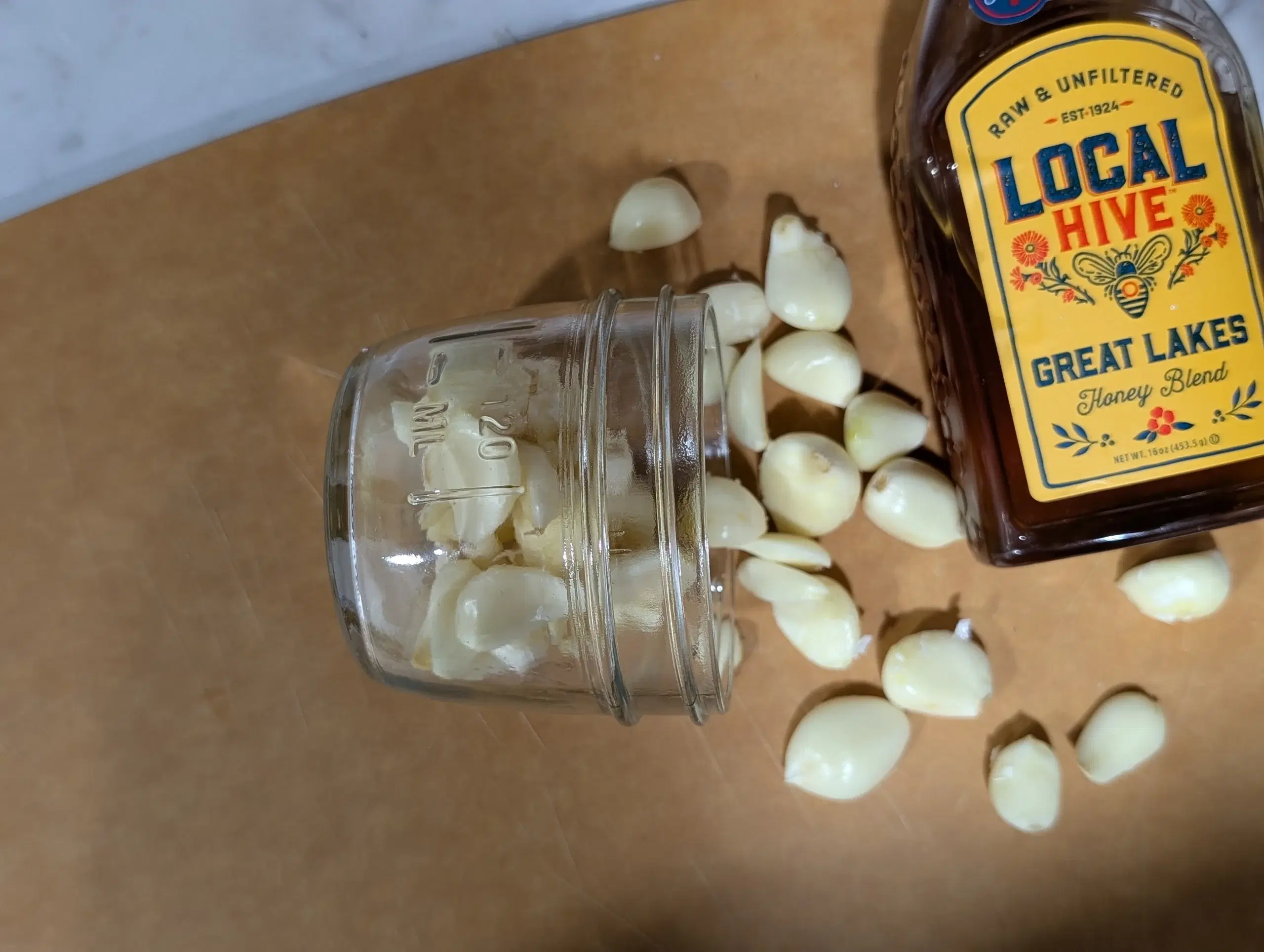
It may be August, but everyone with kids knows what's coming...
Cold and flu season.
If you have little kids, especially between about 1 and 5, you know how frustrating and also frightening those nighttime coughs can be.
We've had some success with products like Zarbee's and Hyland's baby and kids products, but I also like having a few simple remedies in the house before sickness season starts, especially for my husband and me. And since, for the past 6 years I’ve been pregnant or nursing over winter, I haven’t felt comfortable using OTC cough medicines.
One home remedy I really like is fermented garlic honey.
It requires ONLY two ingredients: garlic and honey. It's inexpensive, takes only a few minutes to put together, and once you make it, the honey gradually becomes thinner, garlicky, sweet and surprisingly...kind of good? Did I mention the price difference? Over-the-counter, brand name medicines cost somewhere in the ballpark of $8 - $15. This home remedy costs ~$2.60 for conventional garlic and honey and ~$4.60 for organic garlic and organic raw/unfiltered honey (per 8 oz batch).
Nothing is going to magically erase every cough or cure a viral infection overnight. But honey itself actually has some evidence behind it for soothing coughs in children over age 1, and garlic contains some fascinating sulfur chemistry that scientists continue to study.
So let's make some and talk about what is actually happening inside that jar.
Why Honey for a Cough?
This isn't just an old wives' tale.
Honey coats and soothes the throat, and research suggests that it can reduce the frequency and severity of coughing in children with upper respiratory infections. That's especially helpful at night when a nagging cough is keeping everyone awake.
It doesn't cure the cold; rather, think of it as symptom relief.
Honey may make an irritated throat feel better and make coughing less bothersome while your immune system does the actual work of fighting the infection.
And Why Add Garlic?
This is where the food science gets really interesting. An intact garlic clove keeps some of its important chemicals separated from each other. Garlic contains a sulfur-containing compound called alliin and an enzyme called alliinase. As long as the garlic clove stays intact, they remain largely separated.
But when you crush, press or chop the garlic, you rupture the plant cells.
Suddenly: Alliin + alliinase → allicin
Allicin is one of the compounds responsible for that unmistakable smell you get immediately after crushing fresh garlic. That's why I lightly press the cloves before putting them into my honey rather than leaving every clove completely intact. You're physically breaking those cellular walls and allowing the chemistry to begin.
Does the Allicin Survive Fermentation?
This part deserves some clarification because you'll often hear that fermented garlic honey is beneficial “because of the allicin.” That's a little too simple. Allicin is highly reactive and unstable. After it forms in crushed garlic, it begins reacting and breaking down into other sulfur-containing compounds.
So I wouldn't think of a six-week-old jar of fermented garlic honey as a jar full of unchanged allicin. Instead, think of crushing the garlic as starting a cascade of sulfur chemistry.
Allicin forms first and then transforms into other organosulfur compounds. Scientists are studying many of these garlic-derived compounds for antimicrobial, antioxidant, anti-inflammatory and other biological activities.
Whether those laboratory findings translate into meaningful cold and flu benefits in people—and specifically in homemade fermented garlic honey—is much less certain, but it has been a known remedy for years!
What Does the Research Actually Say?
Here's where I think it's important to be fair to both traditional remedies and modern research.
There is legitimate research supporting honey for cough relief, particularly in children over age
- The evidence specifically showing that garlic prevents or treats the common cold is much thinner. That doesn't automatically mean garlic has no useful biological effects. It means we don't currently have enough high-quality human clinical trials to confidently say, “Take this amount of garlic and it will prevent or cure a cold.”
It's also worth remembering that research isn't distributed equally across every possible food, herb and traditional remedy. Large clinical trials are expensive, and there may be less commercial incentive to fund extensive trials of inexpensive foods that people can purchase at the grocery store.
# How to Make Fermented Garlic Honey
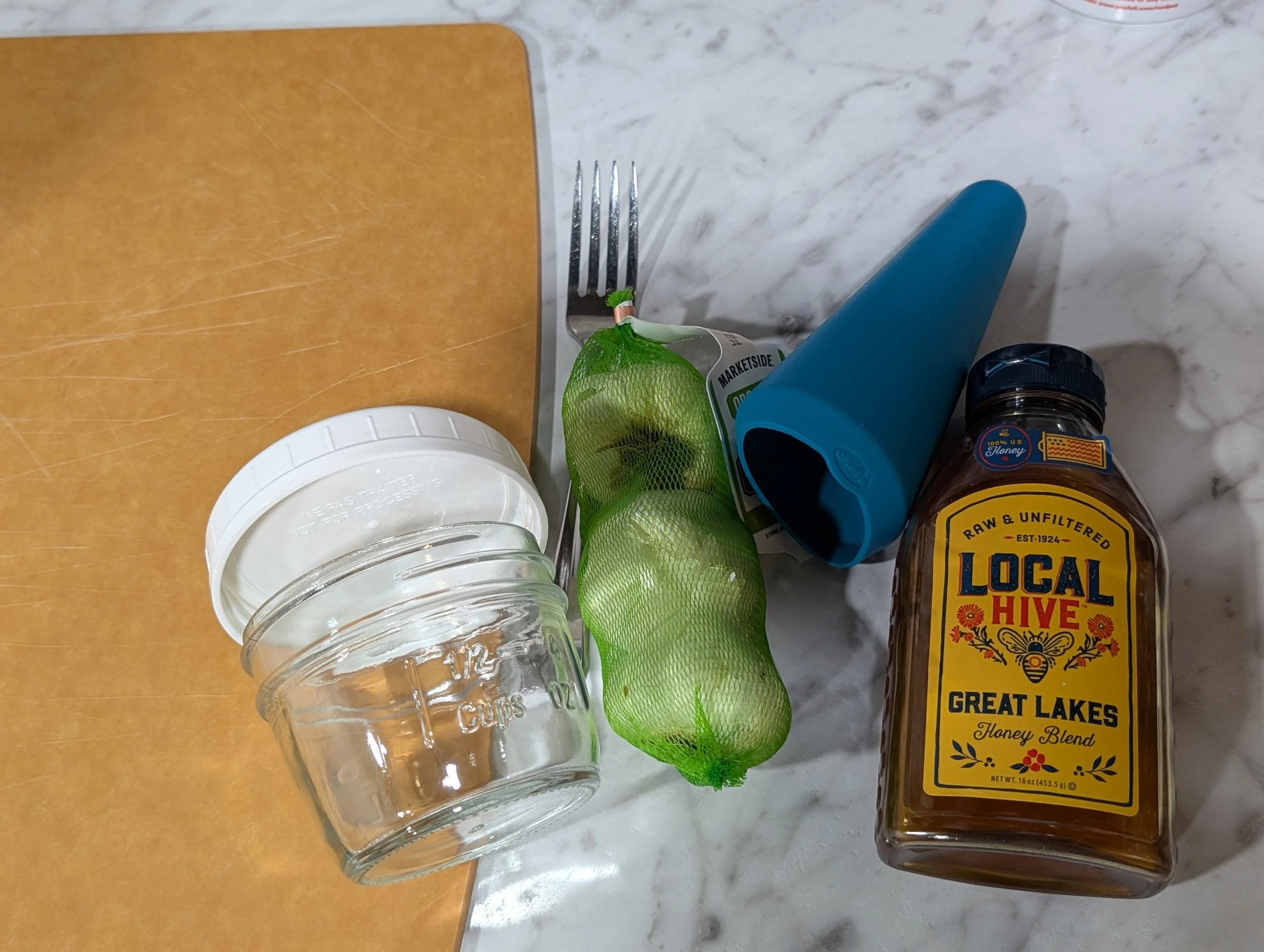
And now for the easy part.
Fair warning: your kitchen is about to smell like garlic.
Ingredients & Materials
For one 8-ounce jar:
- 1½–2 bulbs fresh garlic, approximately 50 grams after peeling
- Approximately 6–8 ounces raw honey, or enough to generously cover the garlic
- 8-ounce glass Mason jar
- Lid that fits your jar
- Cutting board
- Fork
- Knife
Optional but Helpful
- Silicone garlic peeler
- Garlic press
- Digital kitchen scale
Why I Like Using a Kitchen Scale
Could you “measure with your heart” and throw some garlic in the jar? Absolutely. But I just like to know what numbers I’m dealing with so I use a scale :)
Once you've peeled your garlic, you can put the empty jar on the scale, tare it to zero and add approximately 50 grams of garlic. A scale is also handy for bread baking, sourdough, dividing dough evenly, portioning ingredients and dozens of other kitchen projects. It's one of those inexpensive tools I reach for constantly.
What Kind of Honey Should I Use?
I prefer raw, unfiltered honey for this recipe. Local is ideal, and sometimes I have friends and family who graciously share their own honey with us.
Raw honey has undergone less processing and generally hasn't been exposed to the same degree of heat used in some commercially processed honeys. Honey naturally contains sugars, acids, aromatic compounds, enzymes and numerous minor plant-derived compounds.
You don't need an expensive specialty honey to make garlic honey.
If you're choosing between labels, I would prioritize: raw + unfiltered + a trustworthy source over simply looking for the word “organic.” “Organic” describes how a product was produced; it doesn't automatically tell you that honey is raw or minimally processed. Also, a honeybee is going to fly where a honeybee is going to fly. So..unless you’re able to track every plant that every worker bee has flown and brought back pollen from, it’s really hard to determine that honey is 95% Organic. You can make a reasonable guess based on the fields around you though. Honeybees tend to only fly 1-2 miles from their hive.
Step 1: Peel the Garlic
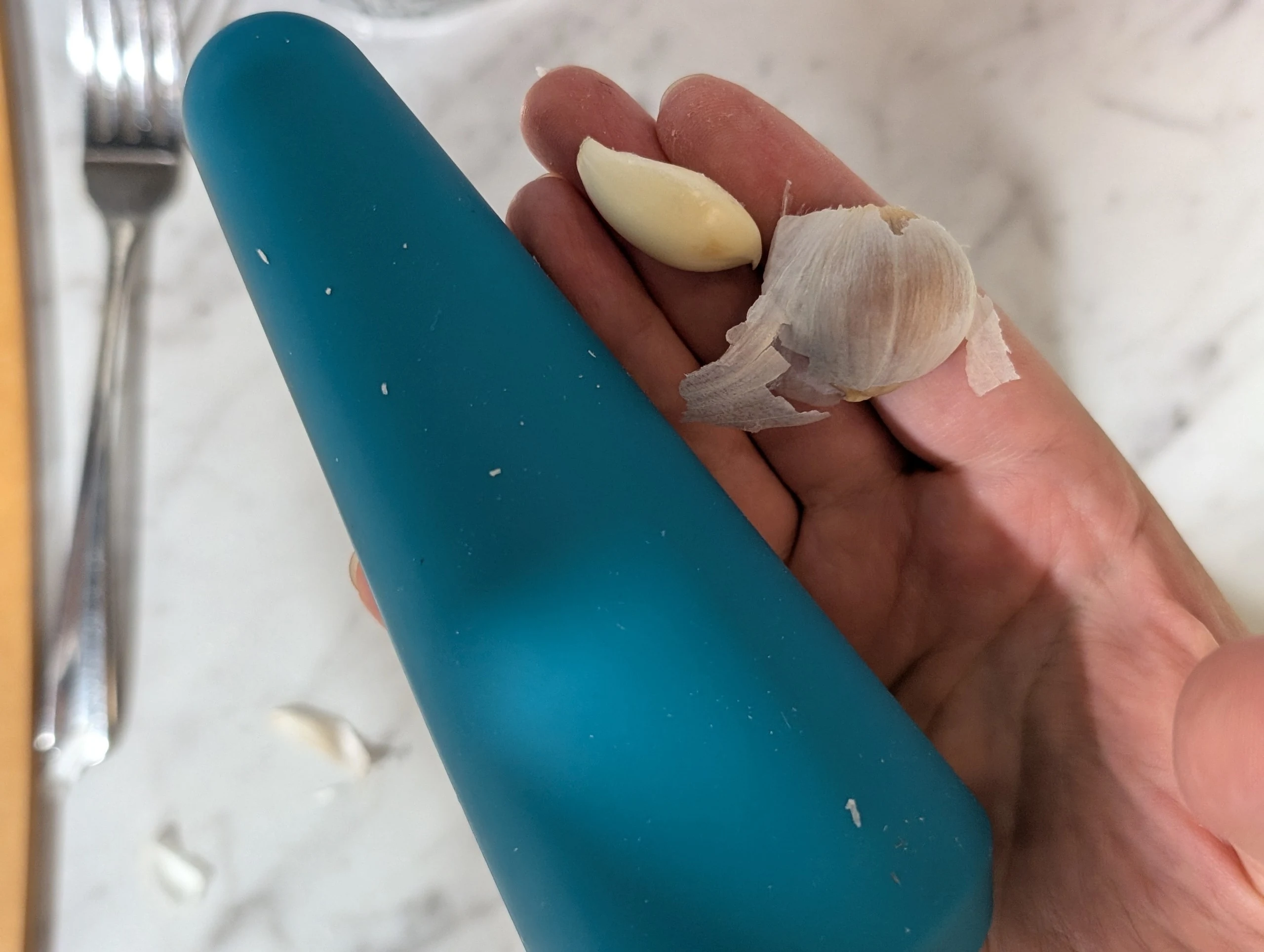
Peel approximately 1½–2 bulbs of garlic.
This is where my little silicone garlic peeler earns its keep. Place about three cloves inside the silicone tube, put it on the counter, press firmly and roll it back and forth.
The papery skin usually slides right off.
If you don't have one, no worries. Cut the hard end from the garlic clove, press firmly against the clove with a fork or the flat side of a knife, and remove the loosened papery skin.
Step 2: Lightly Crush the Garlic
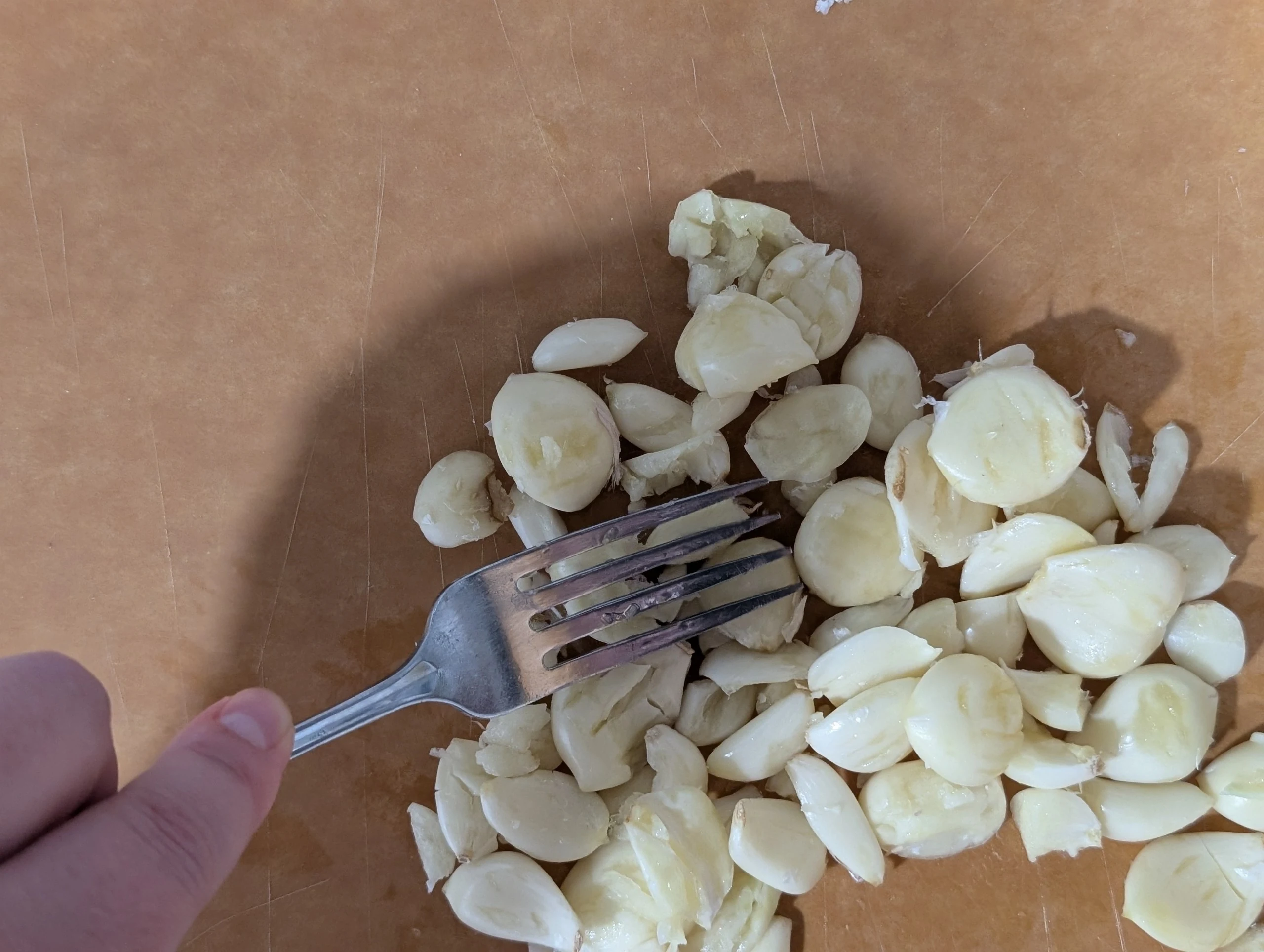
Place your peeled cloves on a cutting board and lightly press each one.
We're not trying to puree or finely mince the garlic. I simply want to break open the clove and damage some of those plant cells. Remember our chemistry lesson? This physical damage allows alliin and alliinase to meet, beginning the reactions that produce allicin and its subsequent sulfur compounds.
Step 3: Add Approximately 50 Grams of Garlic
Place your jar on your kitchen scale and tare the scale. Add approximately 50 grams of lightly crushed garlic. No scale? This does not have to be laboratory-perfect. Fill the jar loosely with your prepared cloves while leaving enough room for plenty of honey and some headspace at the top.
Step 4: Cover Completely With Honey
Pour your honey over the garlic until the cloves are thoroughly coated and covered.
You may need to pour slowly because honey takes its sweet time working its way into all those little spaces. Leave some headspace at the top rather than filling the jar completely to the rim.
Step 5: Close and Coat
Put the lid on tightly. Turn the jar upside down briefly so that the garlic becomes thoroughly coated with honey. Turn it upright again and place it somewhere dark and out of direct sunlight.
And now...We wait.
# What Happens While Garlic Honey Ferments?
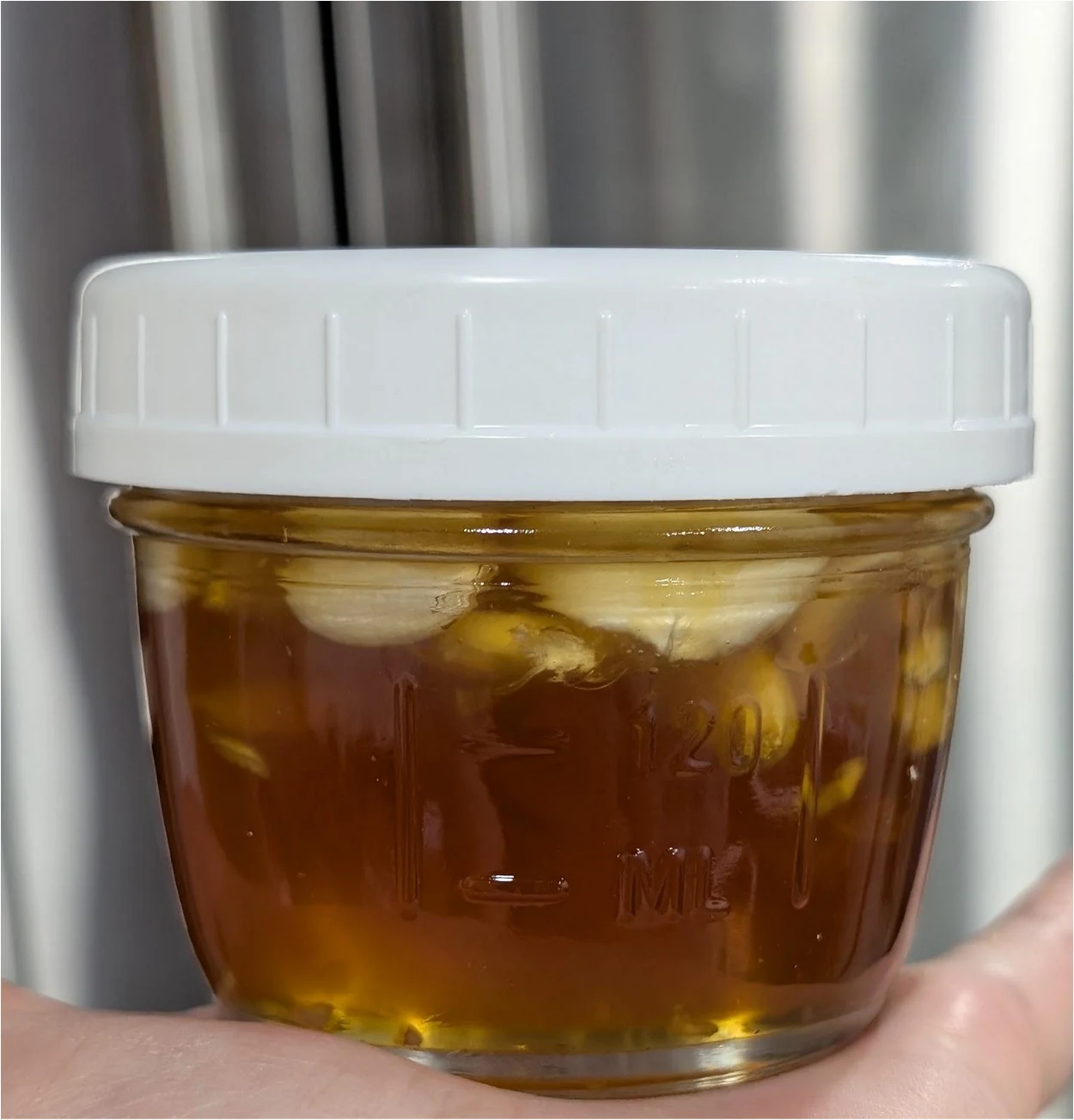
This is the fun part. Over the next several days and weeks, your jar won't look exactly the way it did on Day
- What to watch for: -The honey may become noticeably thinner.
-You may see bubbles.
-The garlic may float.
-The flavor will begin changing.
Why Does the Honey Become Watery?
Honey is extremely concentrated in sugar. Fresh garlic, meanwhile, contains much more water.
When the garlic sits in honey, osmosis begins moving water out of the garlic and into the surrounding honey. You can picture the concentrated honey almost pulling moisture from the garlic. That additional water dilutes the honey, which is why your thick honey gradually becomes noticeably more fluid.So if your garlic honey becomes thinner, that is expected.
Why Is My Garlic Honey Bubbling?
Those tiny bubbles are gas being produced as microorganisms metabolize available sugars during fermentation.
In other words, your jar is biologically active. Gas occupies space and pressure can accumulate inside a sealed container.
Don't Forget to Burp the Jar
During active fermentation, periodically loosen the lid carefully to release accumulated pressure and then close it again. Especially early on, check your jar regularly because fermentation activity can vary considerably depending on ingredients and room temperature.
You can also gently turn or rotate the jar periodically to help keep floating garlic coated in honey.
How Long Should Garlic Honey Ferment?
You'll notice changes relatively quickly, but I like to give mine several weeks before considering it finished. Around 4–6 weeks gives the garlic and honey plenty of time to transform in flavor and consistency.
Fermentation doesn't operate on an exact kitchen timer, though. Temperature, moisture content, honey and garlic can all affect how quickly a batch changes.
# Garlic Honey FAQ
Should I Remove the Garlic After Fermentation?
You don't necessarily have to. Some people leave the cloves in the honey and eat them; others strain the honey once they like the flavor. If keeping the garlic in the jar, make sure it remains coated rather than leaving pieces drying above the surface.
What Are Signs I Should Throw It Away?
If you see visible fuzzy mold, distinctly rotten/off odors, or anything else that makes you question the safety of the batch,F don’t risk it. When in doubt, don't taste-test a questionable ferment. Throw it away.
Can Children Have Fermented Garlic Honey?
Never give honey or foods containing honey to a child younger than 12 months.
Honey can contain Clostridium botulinum spores. An older child's and adult's digestive system can normally handle exposure differently, but an infant's immature intestinal tract can allow the organism to grow and produce toxin, causing infant botulism.
For children over age 1, plain honey is commonly used to soothe coughs. The 1-year guideline is a catch-all designed to keep kids safe, since every child develops internally at a slightly different pace. It’s not as though your baby turns one and—BOOM—something magically changes overnight.
Now, for your kids older than 1, whether they'll willingly consume the garlic part is an entirely different scientific question. Good luck!
# How Much Fermented Garlic Honey Should I Take?
There isn't an established medical dosage for fermented garlic honey specifically. Most of the research supporting this remedy is actually research on honey for soothing coughs, while research on garlic for preventing or treating colds is much more limited.
Because of that, I don't treat our garlic honey like a medication that needs to be taken on an exact schedule. I use the established guidance for honey as a starting point.
When You Have a Cough or Sore Throat
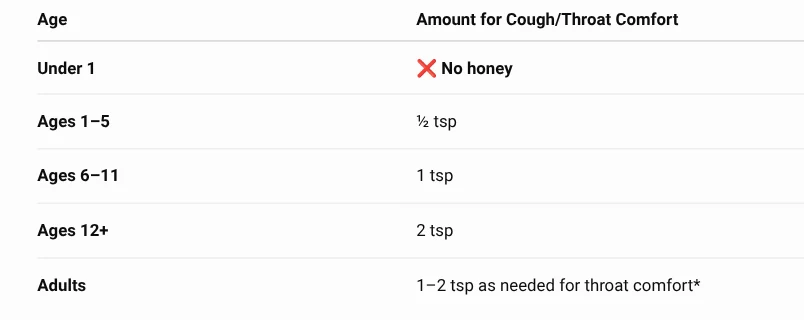
For children over age 1, established pediatric guidance gives the following amounts of honey as a home remedy for cough: For adults, I generally use about 1–2 teaspoons at a time as needed to coat and soothe the throat. This is how we use it in our home rather than an established medical dosage for fermented garlic honey.
You can take some of the honey itself or eat a fermented garlic clove along with it if you enjoy the garlic.
What About Taking Garlic Honey Every Day for Prevention?
This is where the science becomes much less certain.
There is not an established preventative dose of fermented garlic honey, and I don't want to present one as though there is.
If we choose to use it regularly during cold and flu season, I think of it as a food in our diet rather than medicine—for example, an adult might have a teaspoon of the honey or a garlic clove.
For children over age 1, I would be even more conservative about presenting daily garlic honey as a “preventative treatment.” Honey can be part of their normal diet, but there isn't research establishing a daily fermented-garlic-honey dose that prevents children from getting sick.
Remember: These amounts refer primarily to the honey portion of garlic honey. There is currently no scientifically established pediatric or adult dose for homemade fermented garlic honey itself.
And more isn't necessarily better. Honey is still a concentrated source of sugar, and garlic can cause stomach upset or irritation in larger quantities.
Is One 8-Ounce Jar Enough for My Family?
Maybe not!
An 8-ounce jar is a great size for learning how to make fermented garlic honey and keeping a smaller amount on hand.
But if several people in your family are using honey during cold season, you'll be surprised by how quickly an 8-ounce jar disappears.
Instead of making one enormous batch for the entire winter, I prefer the idea of making smaller batches periodically.
That way you can start another jar before the first one runs out.
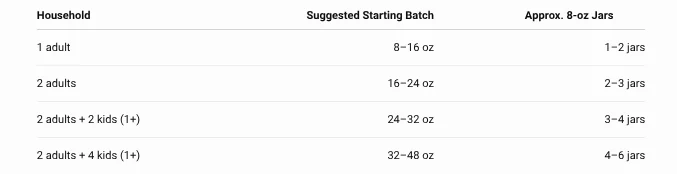
Fermented Garlic Honey Batch Size Guide for Families
These are batch-planning suggestions, not recommended medical doses. How quickly your family goes through garlic honey will depend on how you choose to use it.
Remember: Honey should never be given to children younger than 12 months.
For a larger family, I personally like the idea of making multiple 8-ounce jars rather than one giant jar. You can stagger your batches, open one at a time and start another before your current supply runs out.
# One Last Important Note
I'm a big believer in having simple things available at home—honey, fluids, rest, humidifiers and the other comfort measures that can make an ordinary cold a little less miserable.
But natural and medical care don't have to compete with each other.
We use home remedies for ordinary symptoms. We use doctors when we need doctors.
If somebody is unusually sick, symptoms are severe or worsening, there's trouble breathing or dehydration, a high or concerning fever, or your parental gut is simply telling you something isn't right:
Call the doctor. Enjoy Your Fermented Garlic Honey!
I hope you enjoy making your fermented garlic honey! There is something so satisfying about making simple home remedies for my family during the summer that I know we'll be glad to have tucked away when cold and flu season rolls around.
I love the idea of food as medicine whenever possible—using simple ingredients from the kitchen to nourish our families, soothe some of those everyday discomforts, and hopefully make the winter sick days just a little bit easier.
So make a jar (or a few!), tuck them away, and hopefully by the time winter rolls around you'll be very glad you did.
God bless!
References & Further Reading
- Oduwole O, Udoh EE, Oyo-Ita A, Meremikwu MM. Honey for acute cough in children. Cochrane Database of Systematic Reviews. 2018;4:CD007094. doi:10.1002/14651858.CD007094.pub5.
- Lissiman E, Bhasale AL, Cohen M. Garlic for the common cold. Cochrane Database of Systematic Reviews. 2014;11:CD006206. doi:10.1002/14651858.CD006206.pub4.
- Borlinghaus J, Albrecht F, Gruhlke MCH, Nwachukwu ID, Slusarenko AJ. Allicin: Chemistry and Biological Properties. Molecules. 2014;19(8):12591–12618. doi:10.3390/molecules190812591.
- Li X, et al. Bioavailability, Health Benefits, and Delivery Systems of Allicin: A Review. Journal of Agricultural and Food Chemistry.
- doi:10.1021/acs.jafc.3c05602.