Naptime Village Recipe
A simple sheet pan pork tenderloin dinner with roasted potatoes, onions, and fresh homemade bread.
Prep
15 mins
Cook
28 mins
Total
43 mins
Serves
4 servings
Difficulty
Easy
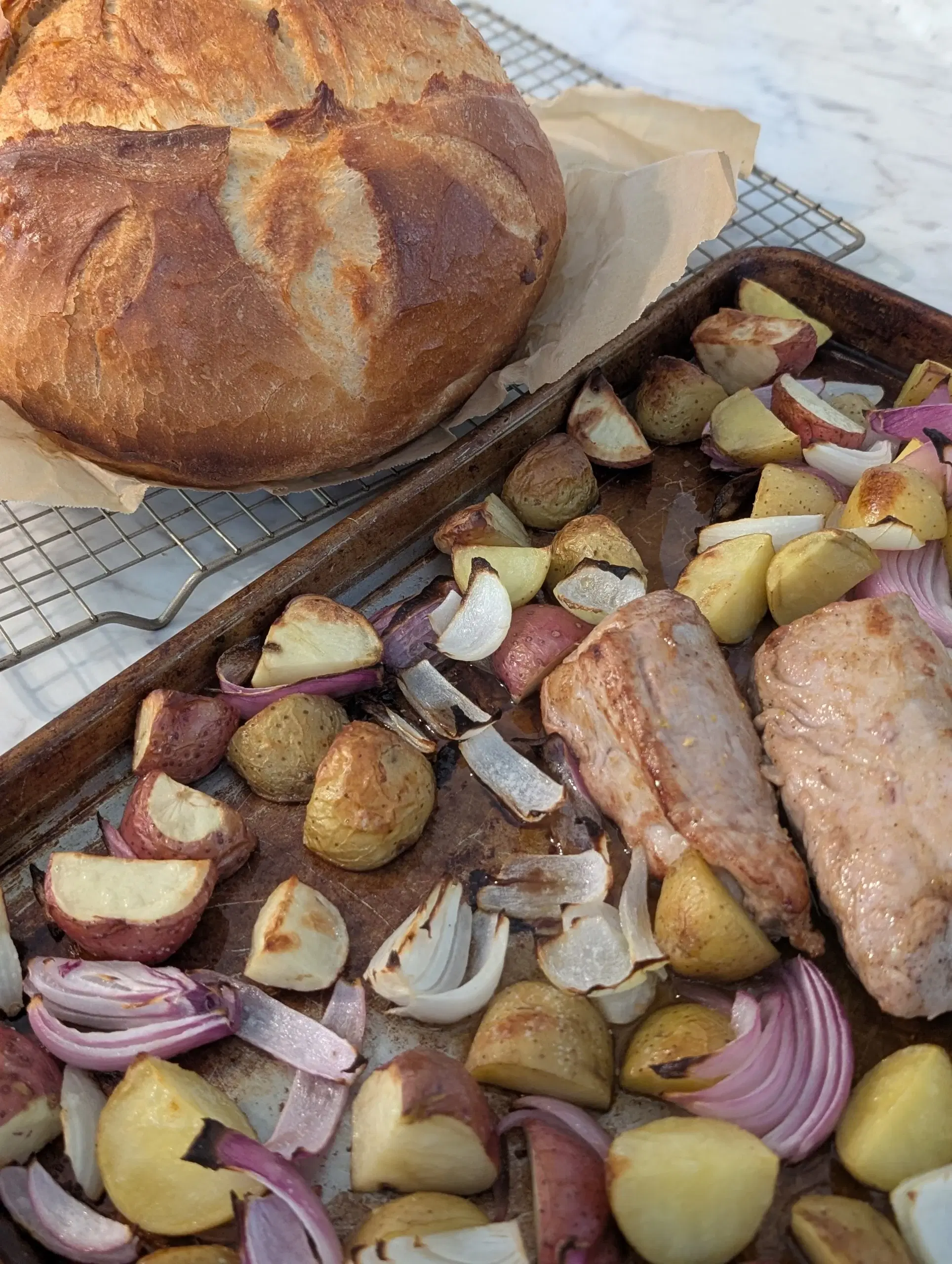
Fresh homemade boule bread
Butter
Green beans
Broccoli
Salad
Butternut squash ravioli with brown butter sage sauce
Keep this recipe handy
Tips, variations, storage advice, and quick fixes—all in one place.
Store leftover pork, potatoes, and onions in an airtight container in the refrigerator.
Use leftovers for lunches.
Reheat gently so the pork does not dry out.
If the pork tenderloin is dry, it was probably overcooked.
If the vegetables are not tender when the pork is done, remove the pork to rest and return the vegetables to the oven for a few more minutes.
If the pork is browning too quickly, tent loosely with foil.
If the glaze darkens too much, add it only during the final few minutes of cooking.
If the potatoes are large, cut them smaller so they finish roasting with the pork.
See what other cooks think and share your own tips.
Want to leave a review?
Sign in with your account to rate this recipe and share your notes.
Loading reviews…
There's something satisfying about a simple sheet pan dinner. On busy evenings, I want a meal that feels homemade and nourishing without requiring five different pots and pans. This juicy pork tenderloin paired with roasted potatoes and onions is one of those recipes. I can quickly throw it together during naptime and get it on the grill or oven in a jiff! Everything cooks on a single sheet pan — you’ll want at least a half-pan sheet pan for this meal — while a fresh boule of bread cools on the counter. This meal is simple enough for a weeknight but special enough for Sunday dinner. Contains Affiliate Links.
One sheet pan for easy cleanup.
Family-friendly flavors.
Naturally gluten-free without the bread.
Packed with protein and vegetables.
Great leftovers for lunches.
Uses affordable ingredients.
Get a free pdf print out for the kids to enjoy the meal too.
Paper towels
Small bowl
Meat thermometer
Foil
Knife
Ingredient notes
I recently discovered that some Amazon Grocery products are actually a few cents cheaper than the Walmart brand — not a huge savings but worth checking out if you’re trying to pinch pennies.
For this recipe, I used both red and yellow potatoes, along with a red onion and a sweet onion.
Different varieties contain different plant compounds and micronutrients.
Red potatoes and red onions contain anthocyanins — the same family of antioxidants found in blueberries and purple cabbage — while yellow potatoes offer their own unique nutrient profile.
Will one meal change your health? No. But over time, eating a variety of colorful foods can help increase the diversity of nutrients in your diet.
For roasting vegetables, I often pair avocado oil and butter, olive oil and tallow, or naturally refined coconut oil and avocado oil.
Each fat contributes a different fatty acid profile and flavor.
I enjoy the richness that comes from combining a saturated fat source with an unsaturated fat source rather than relying on only one cooking fat all the time.
Preheat your oven to 425°F.
Wash the potatoes and cut them into halves or quarters depending on size. Cut the red onion and sweet onion into wedges.
Spread the potatoes and onions on a large sheet pan. Drizzle with avocado oil and add your chosen saturated fat, such as butter, tallow, or refined coconut oil. Season generously with salt and pepper. Toss well to coat.
Pat the pork tenderloin dry with paper towels. Rub with avocado oil.
Combine the salt, garlic powder, onion powder, paprika, and black pepper. Rub the seasoning mixture over the entire tenderloin.
Place the seasoned pork tenderloin on the sheet pan alongside the vegetables.
Roast at 425°F until the thickest part of the pork reaches 140–145°F. A 1 pound tenderloin usually takes 18–22 minutes, and a 1 1/2 pounds tenderloin usually takes 22–28 minutes.
During the final 5 minutes of cooking, brush the pork with the optional honey mustard glaze made from honey, Dijon mustard, and apple cider vinegar.
Remove the pork from the oven and tent loosely with foil. Allow it to rest for 10 minutes before slicing.
Slice into medallions and serve alongside the roasted potatoes, onions, and warm homemade bread.
A higher roasting temperature helps create a flavorful exterior while keeping the inside tender and juicy.
Cutting the vegetables into similar sizes helps them roast more evenly.
Tossing the vegetables well helps the oil, fat, salt, and pepper coat the surface for better roasting.
Drying the pork helps the oil and seasoning stick better.
Seasoning the entire tenderloin gives the lean meat more flavor in every slice.
Cooking everything on one sheet pan keeps cleanup simple.
Because tenderloins vary greatly in thickness, a meat thermometer is the best tool for success.
The glaze creates a lightly sweet, tangy finish that pairs beautifully with roasted potatoes and onions.
Resting is important for juicy pork because the juices redistribute and the temperature rises slightly.
Slicing after resting helps the pork stay tender instead of losing its juices on the cutting board.