Naptime Village Recipe
Sweet potato sourdough discard Belgian waffles with crisp edges, fluffy centers, warm cinnamon, and make-ahead freezer instructions.
Prep
15 mins
Cook
15 mins
Total
30 mins
Serves
4 waffles
Difficulty
Easy
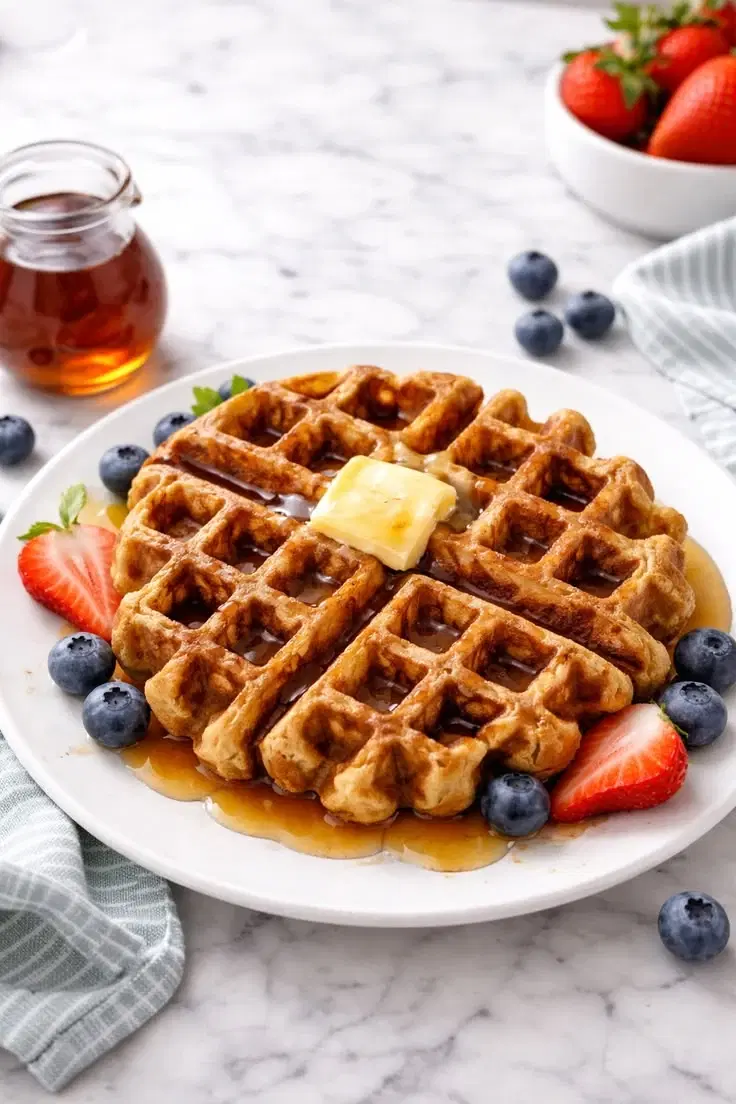
A practical, flavor-forward Belgian waffle that turns leftover mashed sweet potato and unfed sourdough discard into crisp-edged, fluffy-centered waffles. The sweet potato contributes natural sugars and moisture for tenderness and color; the discard adds gentle acidity that boosts browning and aroma. A short batter rest lets starches hydrate and the chemical leaveners start working, so the hot iron can set structure without drying the interior.
This batter balances moisture, starch, fat, and gas. Mashed sweet potato brings water and pectin that hold moisture through cooking; eggs supply proteins that set into a light lattice; flour starches gelatinize to create crumb; and butter or oil lubricates and enhances Maillard browning. Sourdough discard’s mild acidity improves flavor and helps the baking soda generate carbon dioxide. The result: crisp surfaces from rapid steam release and a tender interior from hydrated starches.
From a nutrition-performance lens, this waffle leans more balanced than a sugar-heavy mix because sweet potato and eggs add fiber and protein, while discard contributes fermentation notes. The plate trends neutral overall, with attention needed around sodium from leaveners/salt and the refined flour base. Toppings and sides are the easiest way to tilt the meal toward more fiber and protein.
Belgian waffle iron
Large mixing bowl
Whisk
Measuring cups and spoons
Ladle or 1/2 cups scoop
Rubber spatula
Wire rack (for keeping waffles crisp)
Ingredient notes
Use fully cooked, cooled, smooth mashed sweet potato for the most even batter.
Unfed sourdough discard adds tang and works best at room temperature.
Discard thickness varies, so adjust the final batter with a splash of milk if needed.
Half whole wheat flour works, but all whole wheat flour can make the waffles denser.
Preheat waffle iron
Preheat to Belgian waffle setting and lightly grease if needed.
Mix wet ingredients
Whisk until smooth.
Add fats and flavor
Stir into wet mixture until combined.
Add dry ingredients and rest
Fold in dry ingredients just until no dry streaks remain. Rest batter 5 to 10 minutes.
Cook waffles
Scoop into hot iron and cook until deep golden and crisp on the edges. Serve warm with your preferred toppings.
Greek yogurt and berries
protein, tang, and fiber to balance sweetness
Peanut butter and sliced banana
adds satiety and potassium
Cottage cheese with cinnamon and pear
high protein, complementary spice profile
Keep this recipe handy
Tips, variations, storage advice, and quick fixes—all in one place.
Refrigerate fully cooled waffles in an airtight container up to 3 days.
Freeze in a single layer, then store with parchment between pieces for up to 2 months.
Reheat in a toaster, toaster oven, or 375°F oven until hot and crisp; avoid microwaving if you want crunchy edges.
Waffles soft, not crisp: Preheat the iron longer, include the optional extra oil, and cook until steam slows significantly; cool on a wire rack.
Dense texture: Fold dry ingredients just until hydrated and honor the 5–10 minute rest; thin a too-thick batter with 1–2 tablespoons milk.
Sticking to plates: Lightly grease the iron between batches and allow a full set before opening; opening early tears structure.
Flat flavor: Do not skip salt or vanilla; if using unsweetened toppings exclusively, keep a modest maple drizzle or add cinnamon for aroma.
Uneven holes or tunnels: Batter was overmixed post-flour—switch to gentle folding and stop as soon as dry streaks vanish.
Can I use active starter instead of sourdough discard?
Yes. Active starter can replace discard. Expect slightly milder tang and a touch more rise during the rest as wild yeast activity continues.
Which sweet potato prep gives the best texture?
Roasted sweet potato concentrates flavor and makes a slightly thicker, richer batter; steamed blends more easily. Either works if it’s fully cooked, cooled, and mashed smooth.
Why do these waffles brown so well?
Natural sugars from sweet potato and lactose from milk, plus mild alkalinity from baking soda reacting with discard acids, accelerate Maillard browning on a fully preheated iron.
See what other cooks think and share your own tips.
Want to leave a review?
Sign in with your account to rate this recipe and share your notes.
Loading reviews…