Naptime Village Recipe
Soft sweet potato sourdough rolls with overnight fermentation, tender golden crumb, active starter, and a buttery dinner-roll finish.
Prep
30 mins active (+ overnight fermentation)
Cook
18-22 mins
Total
14-18 hrs
Serves
12 rolls
Difficulty
Easy
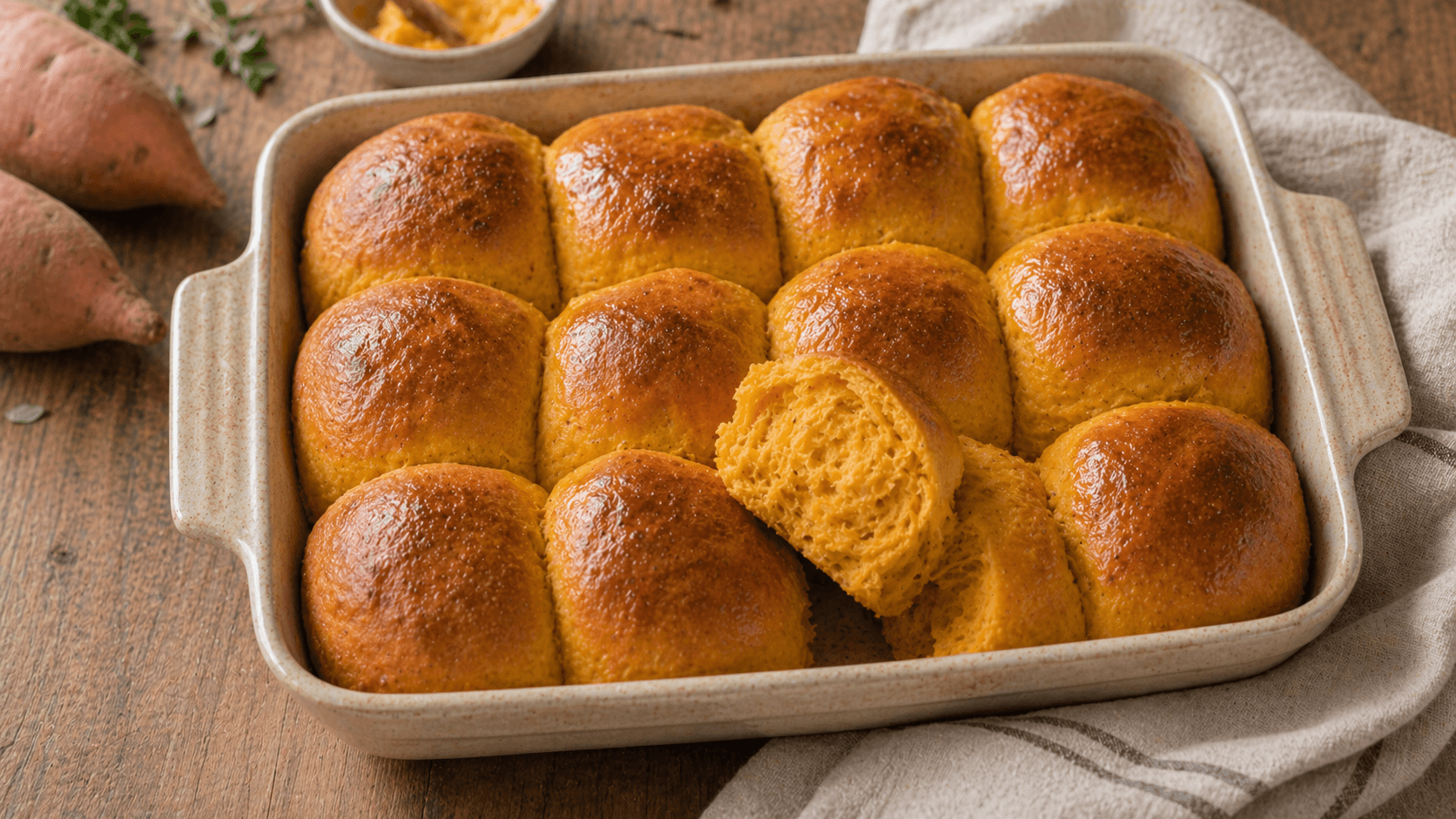
Soft, lightly sweet, and timed for real life: these sweet potato sourdough rolls use active starter and an overnight cold ferment for gentle acidity, flavor depth, and effortless scheduling. Mashed sweet potato lends starches and pectins that hold water for a plush crumb and natural golden color. Proof fully, bake to amber, and brush with butter for a classic dinner‑roll finish.
This is an enriched sourdough system tuned for softness and scheduling. Bread flour supplies the gluten network; fat, milk sugars, and sweet potato starches/pectins interrupt that network enough to keep the crumb tender. An autolyse‑style rest hydrates flour and sweet potato so the dough strengthens with less kneading. The overnight cold ferment slows yeast and bacteria, building flavor while tightening the dough for cleaner shaping. Final proof is intentionally generous so the enriched dough bakes up light instead of tight.
Kitchen scale
Large mixing bowl or stand mixer bowl
Stand mixer with dough hook (optional, but helpful for enriched dough)
Bench scraper
9×13 inch baking dish or similar buttered dish
Plastic wrap or lid
Pastry brush
Instant‑read thermometer (optional, for doneness; target ~198–202 F center)
Ingredient notes
Bread flour gives the rolls enough structure while still baking up soft.
Milk gives the most classic dinner-roll flavor and browning; water keeps the dough simpler; water kefir adds more tang.
Honey and maple syrup both work well. Maple gives a slightly deeper, warmer sweetness.
Butter in the dough softens the crumb, and melted butter after baking keeps the tops tender.
Mix the dough (night before)
Mix until no dry flour remains. Let the dough rest for 30 minutes to hydrate the flour.
Add enrichments and knead
Add the sweetener, salt, and butter, then knead until smooth and elastic, about 6 to 8 minutes in a mixer or by hand.
Bulk fermentation
Cover and let the dough rest at room temperature for 1 hour. Transfer to the refrigerator and ferment overnight.
Warm slightly and divide (next morning)
Remove the dough from the refrigerator and let it sit at room temperature for 45 to 60 minutes. Divide into 12 equal pieces, about 85 g each.
Shape the rolls
Shape each piece into a tight ball and place in a buttered baking dish, leaving a little space between the rolls.
Final proof
Let the rolls rise until soft and puffy, about 2 to 3 hours at room temperature or faster in a proof setting around 75 to 80°F.
Bake
Bake at 375°F for 18 to 22 minutes, until golden brown on top and baked through.
Brush and serve
Brush with melted butter immediately after baking for a softer, shinier top.
The overnight cold fermentation improves flavor and makes the dough easier to shape cleanly the next morning.
Sweet potato soup or butternut squash soup for a like‑meets‑like pairing
Roasted chicken or turkey; the lightly sweet crumb balances savory drippings
Ham or pot roast; the soft texture soaks up sauces well
Herb butter, cultured butter, or honey for simple toppings
Leftover roll sliders with turkey, cranberry, and a crunchy slaw
Keep this recipe handy
Tips, variations, storage advice, and quick fixes—all in one place.
Room temperature: Store covered 1–2 days.
Refrigerator: Up to 5 days, well wrapped to prevent drying.
Freezer: Freeze baked, cooled rolls up to 2 months; thaw wrapped at room temp.
Rewarm: 300 F oven for 6–10 minutes until warm; brush with a little butter or oil to refresh the crust.
Dense crumb: Usually under‑proofing or a sluggish starter. Extend the final proof until the fingertip dent rebounds slowly with a faint impression.
Dough too slack: The puree may be wetter than expected. Chill 10–15 minutes, then add 5–10 g flour during a brief knead to restore gentle tack.
Rolls spread: Increase shaping tension and use a snug pan so sides support vertical rise.
Over‑browning: Lower rack position or tent with foil near the end; sugars from puree and sweetener accelerate color.
Too sour: Shorten the initial room‑temp rest before chilling or use starter closer to peak to limit acid build‑up.
See what other cooks think and share your own tips.
Want to leave a review?
Sign in with your account to rate this recipe and share your notes.
Loading reviews…