Naptime Village Recipe
Sweet potato meal prep bowls with roasted sweet potatoes, quinoa, black beans, greens, avocado, and lime for easy 45-minute lunches.
Prep
15 mins
Cook
30 mins
Total
45 mins
Serves
4 bowls
Difficulty
Easy
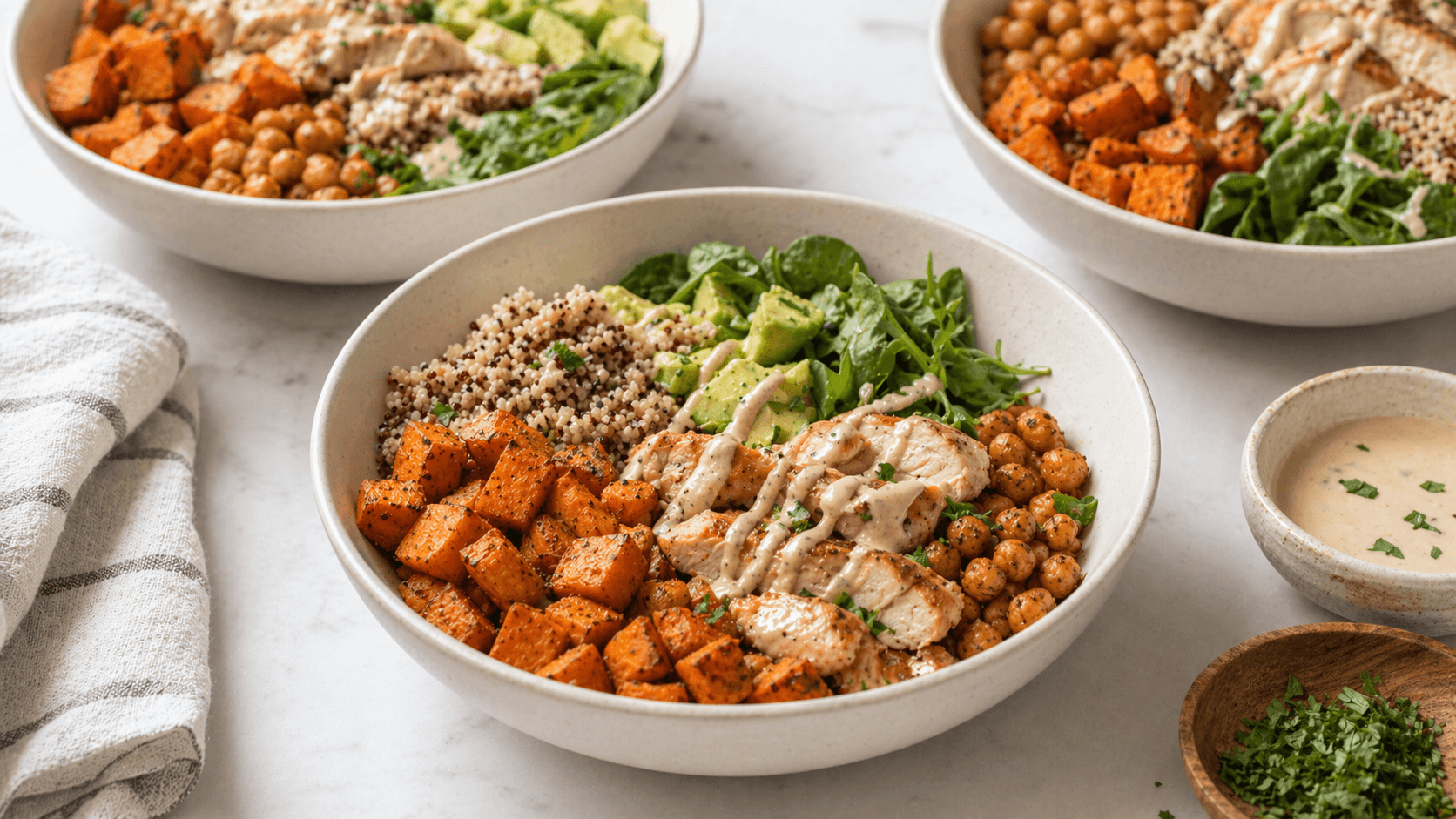
A plant-forward bowl built for weekday reliability: roasted sweet potatoes for caramelized edges, quinoa and black beans for steady energy and fullness, spinach for fresh volume, and avocado with lime for a creamy-acid finish. Roast hot (425 F), cool the warm components before sealing, and keep avocado or dressing separate. You’ll assemble four bowls in about 45 minutes that still taste bright on day three.
This bowl stays satisfying because each component does a specific job: high-heat roasting drives browning on sweet potatoes, grains and beans supply steady fiber and protein, and acid plus measured fat sharpen flavor without heaviness. The storage plan matters as much as the ingredients—cool before sealing to limit steam, and layer so delicate greens avoid heat and moisture.
Key forces at work:
Dehydration and browning: 425 F roasting concentrates sugars on sweet potato surfaces for caramelized edges.
Moisture management: cooling to “warm” before lidding reduces trapped steam and sogginess.
Layering logic: sturdy, reheatable items on the bottom; delicate greens and fresh toppings on top or separate.
Oxidation control: lime’s acidity slows avocado browning and brightens the whole bowl.
Starch retrogradation: chilling cooked starches (beans, quinoa, potatoes) modestly increases resistant starch, which can help texture and satiety.
Rimmed sheet pan (or two if needed to avoid crowding)
Parchment paper or a silicone baking mat (optional, for easier cleanup)
Small pot with lid for cooking or reheating quinoa
Mixing bowl and spatula/tongs for tossing potatoes with oil and spices
Cutting board and chef’s knife
Meal prep containers (wide, shallow preferred for faster cooling/reheating)
Small lidded sauce cups for lime juice and dressings
Cooling rack (optional, speeds steam release from roasted potatoes)
Ingredient notes
Cooked quinoa and beans make this a flexible base for protein add-ons.
Roast sweet potatoes
Toss and roast at 425°F for 25 to 30 minutes, flipping halfway.
Prepare grains and beans
Warm quinoa and beans if desired, then cool slightly before assembling.
Build bowls
Divide spinach, quinoa, beans, and sweet potatoes across 4 containers.
Add fresh finish
Add lime juice just before serving and keep avocado separate until eating.
Store
Refrigerate and use within 4 days.
Fresh salsa or pico de gallo (pack separately to preserve potato texture)
Greek yogurt–lime sauce or a light cilantro dressing for tang without heaviness
Crunchy slaw (lime-dressed cabbage) to add volume and texture
Simple fruit (citrus, apples) or plain yogurt for a balanced lunchbox add-on
Keep this recipe handy
Tips, variations, storage advice, and quick fixes—all in one place.
Refrigerate assembled bowls (without avocado) up to 4 days; keep sauces and lime in separate cups.
Cool warm components before lidding to avoid excess condensation and soggy textures.
Reheat the quinoa/beans/sweet potatoes until warm, then add spinach, avocado, lime, and cold toppings.
To slow avocado browning: slice just before eating or toss with lime and press plastic wrap directly against the surface in a small airtight cup.
Do not freeze fully assembled bowls with greens or avocado. You can freeze roasted sweet potatoes, quinoa, and beans separately for later use.
Potatoes aren’t browning: Increase pan space or use two pans, and ensure the oven is fully preheated. A brief convection or broil finish helps.
Bowls taste soggy: Cool warm components longer before sealing, and avoid stacking hot containers.
Greens wilt: Store greens separately or add after reheating the base.
Avocado browns: Slice at serving or store with lime juice in an airtight cup with minimal air exposure.
Beans seem watery: Drain and briefly pat dry before assembly; excess moisture migrates during storage.
How long do sweet potato meal prep bowls last?
Up to 4 days refrigerated in airtight containers. Store avocado and sauces separately so textures stay distinct.
Do I eat these bowls hot or cold?
Either works. For the best texture, reheat the quinoa/beans/potatoes first, then add spinach, avocado, lime, and sauce.
Can I freeze these bowls?
Freeze the cooked potatoes, beans, and quinoa separately if needed. Don’t freeze assembled bowls with greens and avocado.
What proteins can I add?
Grilled chicken, baked tofu, tempeh, salmon, edamame, or a hard-boiled egg all fit the method—store with the warm base so they reheat together.
Can I use canned beans?
Yes. Rinse and drain well to remove excess sodium and moisture before assembly.
See what other cooks think and share your own tips.
Want to leave a review?
Sign in with your account to rate this recipe and share your notes.
Loading reviews…